

A volcano that once blanketed Europe in ash is active again
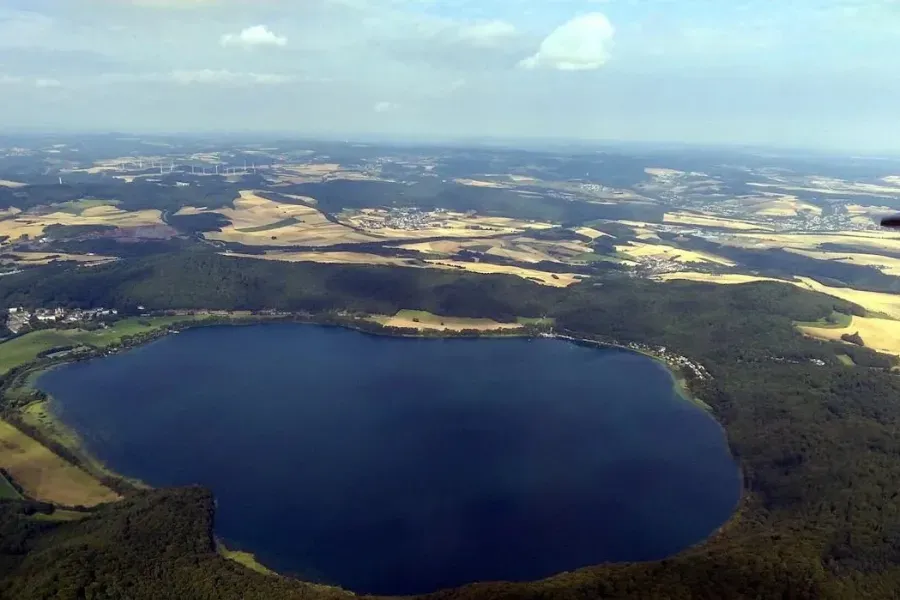
Signs of activity have been detected at the Laacher See volcano in western Germany, which had long been considered dormant. Scientists warn that a possible powerful eruption could have serious consequences not only for Germany but also for much of Europe.
TodayPress TV reports that the Polish publication “Twoja Pogoda” wrote about the development.
According to the report, the volcano is located in the federal state of Rhineland-Palatinate, near the city of Andernach. Its last eruption occurred approximately 13,000 years ago. At that time, tens of cubic kilometres of ash and pumice were released into the atmosphere. Volcanic material spread across a vast area, stretching from Scandinavia to Italy.
The Rhine Valley was the hardest-hit area. In some locations, volcanic deposits reached a thickness of seven metres. Ash and other materials blocked the course of the Rhine River, triggering large-scale flooding. Later, the collapse of the volcanic cone created a caldera that filled with water, forming Lake Laacher See.
One of the signs attracting scientists’ attention is the release of carbon dioxide bubbles from the water near the lake’s southeastern shore. In addition, weak to moderate earthquakes are regularly recorded in the region.
Researchers have also detected a series of microearthquakes in sections of the volcano located at depths of 10 to 40 kilometres. The gradual movement of their focal points towards the Earth’s surface is being considered a possible indication of magma rising upwards.
In the event of a powerful eruption, the greatest danger could potentially threaten the German cities of Koblenz and Bonn. However, the consequences could also affect Central Europe, including ash clouds, acid rain, contamination of soil and water, falling temperatures and severe damage to agriculture.
The publication recalls that the eruptions of Mount Pinatubo in 1991 and Krakatau in 1883 caused a decline in global temperatures. Following the Pinatubo eruption, the planet’s average temperature fell by approximately 0.5 degrees Celsius.
Experts emphasise that the main challenge is the inability to accurately predict when the volcano might erupt, despite modern technological advances.
Kubra Musayeva