A beetle just 2 centimetres long amazes engineers – HERE’S WHY
US scientists are studying the armour structure of a beetle capable of withstanding the weight of a car, working on new engineering solutions that could be used in the aviation industry.
TodayPress TV reports, citing ZME Science.
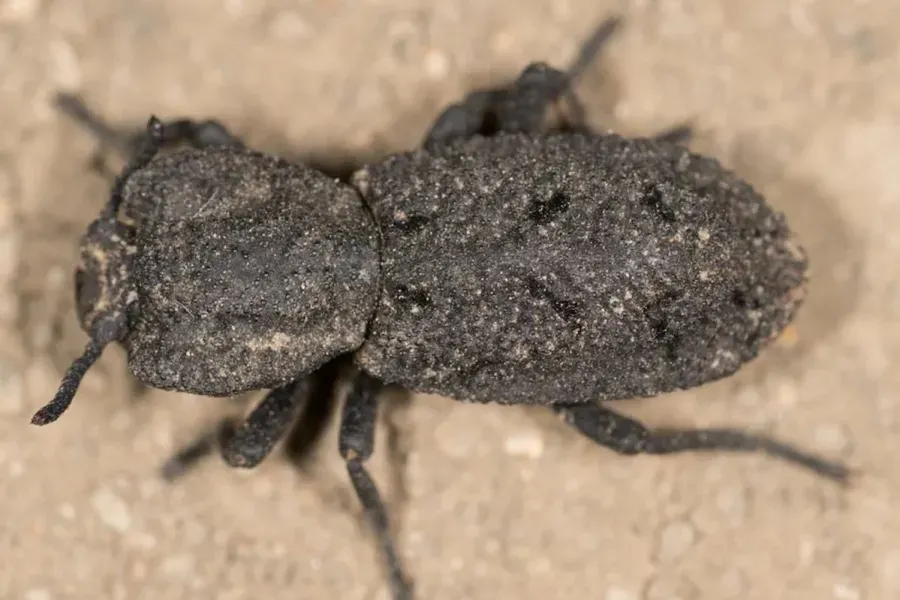
The species in question is Phloeodes diabolicus, a beetle approximately 2 centimetres long that lives in the western regions of the United States. Although it is wingless, its main feature is an exceptionally strong exoskeleton. The two parts of its armour interlock like pieces of a puzzle. This structure allows pressure to be distributed evenly and prevents the armour from breaking apart.
A 2020 study conducted by scientists from the University of California, Irvine, and Purdue University found that the beetle’s exoskeleton can withstand a force of approximately 150 newtons. This is equivalent to a load around 40,000 times its own body weight. For comparison, the pressure generated when a car tyre rolls over the beetle reaches approximately 100 newtons.
Researchers have found that the beetle’s armour does more than resist pressure: it also absorbs energy by deforming in a controlled manner. Under extreme pressure, its internal layers gradually separate, preventing the entire structure from collapsing suddenly.
Scientists have already begun exploring ways to apply these properties in engineering. In 2020, inspired by the beetle’s armour structure, researchers developed a specialised joint made of carbon composite material. The structure demonstrated strength comparable to conventional aerospace joints while offering better energy absorption.
Another study conducted in 2026 examined the possibility of applying the same principle to the repair of composite materials used in aviation. The results showed that joints developed using this method could withstand a 30.47% higher maximum load under tension than conventional repair structures.
However, the technology is not yet ready for direct use in aircraft. The research suggests that defensive mechanisms developed in nature over millions of years could help engineers design more durable aerospace structures with greater resistance to damage.
Kubra Musayeva