
Pashinyan seeks to change the Constitution while allocating billions of drams to the army…
Armenia’s political agenda over the past week has revolved around a new draft Constitution, the peace process with Azerbaijan, the TRIPP project and military funding. The main issues discussed by both pro-government and opposition media have included Yerevan’s future political course, relations with Moscow and the changing geopolitical landscape in the region.
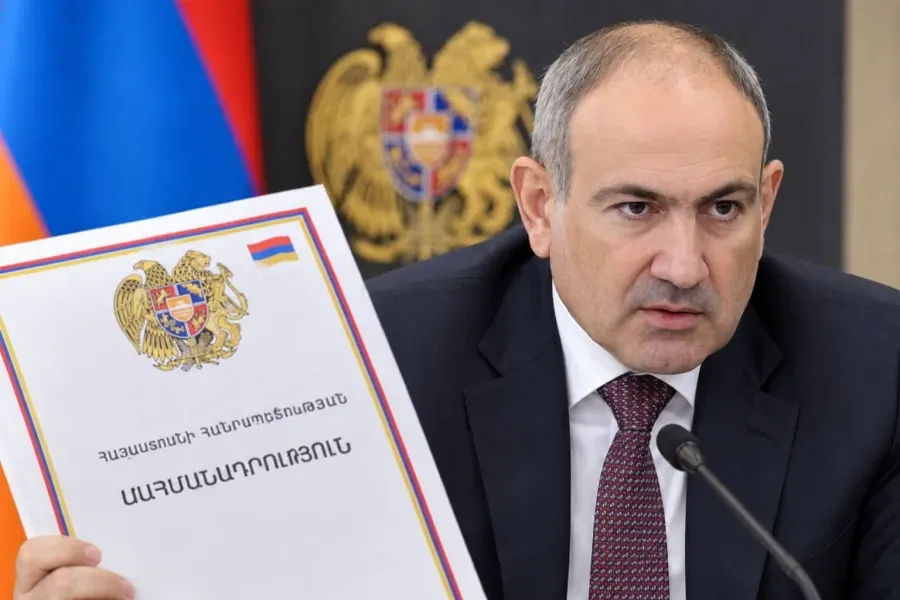
The most widely discussed topic of the week was Prime Minister Nikol Pashinyan’s statements on the new Constitution. The prime minister said the initial draft would be presented to the public on November 23. The government portrays the changes as a way to redefine Armenia’s political future and move the country away from war rhetoric towards a period of peace and development.
Pashinyan has even made his political future dependent on the adoption of the new Constitution. He announced that he would resign if the document failed to pass in a referendum. The prime minister also said he was ready to step down after a peace agreement with Azerbaijan was signed. These statements demonstrate the importance the upcoming referendum is expected to have in Armenia’s domestic politics.
One of the provisions under discussion in the new draft is the abolition of the Security Council. Pashinyan has justified this by citing the need to modernise state governance. The opposition, however, takes a different view of the constitutional amendments. Publications close to the opposition describe the possible removal of the reference to the Declaration of Independence from the document as a retreat from national identity and portray the changes as concessions to Azerbaijan and Türkiye.
In foreign policy, attention has focused primarily on the TRIPP project. Discussions have addressed details of the railway and other transport infrastructure planned under agreements reached between Armenia and the United States. On November 19, the US company AECOM also reviewed preliminary railway studies and potential investment opportunities.
Energy infrastructure has also featured prominently in Pashinyan’s statements. He spoke about the possibility of connecting Armenia’s electricity grids to the energy systems of Azerbaijan and Türkiye. Such potential integration is significant not only for restoring regional communications but also for rebuilding Armenia’s economic ties.
There have also been indications of progress in Yerevan’s relations with Ankara. On November 19, Armenia declared its readiness to open its borders with Türkiye. At the same time, reports of an alleged border incident in the Syunik region sparked discussion in local media. German Foreign Minister Johann Wadephul’s visit to the region also brought renewed attention to calls concerning the Azerbaijan-Armenia peace process.
A diplomatic change has drawn attention in relations with Moscow. Armenia’s ambassador to Russia has been replaced, with Samvel Mkrtchyan appointed in place of Gurgen Arsenyan. Against the backdrop of recent tensions in Russian-Armenian relations, the decision has been interpreted as a sign of a new phase in Yerevan’s diplomatic approach.
At the same time, Armenia is seeking to expand its military and economic cooperation with the West. Intergovernmental economic consultations and meetings on defence cooperation have been held with Germany. A bilateral military cooperation programme for 2027 has been signed with Italy, while Armenia-EU relations and cooperation under the Horizon Europe programme were discussed in Brussels.
Another major issue of the week was Armenia’s 2027 state budget. According to the draft discussed in parliament, defence spending is set to reach 616 billion drams. This represents an increase of 53 billion drams compared with the previous figure. Defence Minister Suren Papikyan justified the increase by pointing to the military spending of neighbouring countries.
On the one hand, Yerevan is highlighting the peace process with Azerbaijan and the reopening of regional communications; on the other, it continues to increase its defence budget. These two areas remain parallel priorities in Armenia’s security policy.
The forecast of nominal GDP reaching 13.6 trillion drams in 2027 has also been among the main topics of economic debate. The Finance Ministry expects the nominal size of the economy to double compared with 2021. Meanwhile, the Central Bank governor said that a hypothetical 10% increase in the price of Russian gas could raise inflation in Armenia by 0.6%. This forecast has once again highlighted the risks that the country’s energy dependence poses to economic stability.
Developments in the armed forces have also attracted attention. The dates for the next winter conscription have been approved, while the death of a serviceman from a gunshot wound on November 19 reignited discussions about discipline and conditions of service in the army.
The government’s plans for technological development were also among the week’s major stories. On November 20, the National Centre for Robotics and Physical Artificial Intelligence was inaugurated. The Armenian authorities announced their intention to turn the country into a regional hub for artificial intelligence and robotics.
Overall, two distinct political approaches emerged in Armenian media coverage over the past week. The government presents the new Constitution, the peace process, TRIPP and technological development as the main elements of the country’s future development model. The opposition, meanwhile, is focusing on the impact of constitutional changes on national and historical principles, public debt and security issues.
The Pashinyan government is seeking both to strengthen its domestic political legitimacy through a referendum on the new Constitution and to expand closer ties with the West and regional economic integration in its foreign policy. Nevertheless, the increase in defence spending shows that Yerevan does not view its peace agenda separately from security concerns.
Jala Rovshan