
Enver Pasha used to turn Armenians against Azerbaijan...
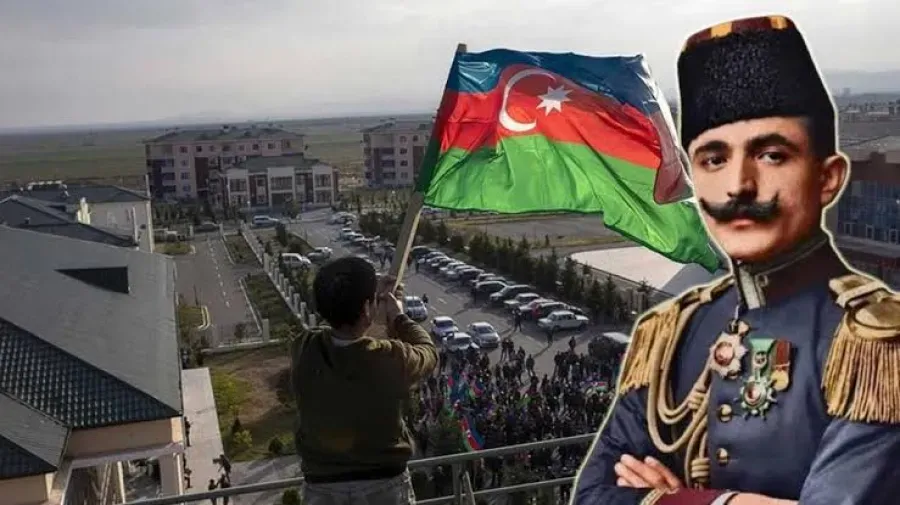
Alleged fake statements circulated in the name of the Armenian parliament and manipulative visuals created using artificial intelligence have once again brought the issue of information manipulation by Armenians into focus.
In particular, an AI-generated visual shared on a page called “issmailenverpasa” has sparked widespread discussion.
The post features the Armenian parliament’s chamber and a photograph of Enver Pasha, one of the prominent military and political figures of the Ottoman Empire. It claims that the Armenian parliament has allegedly objected to efforts in Turkey and Azerbaijan to commemorate Enver Pasha, name streets after him and honour his memory.
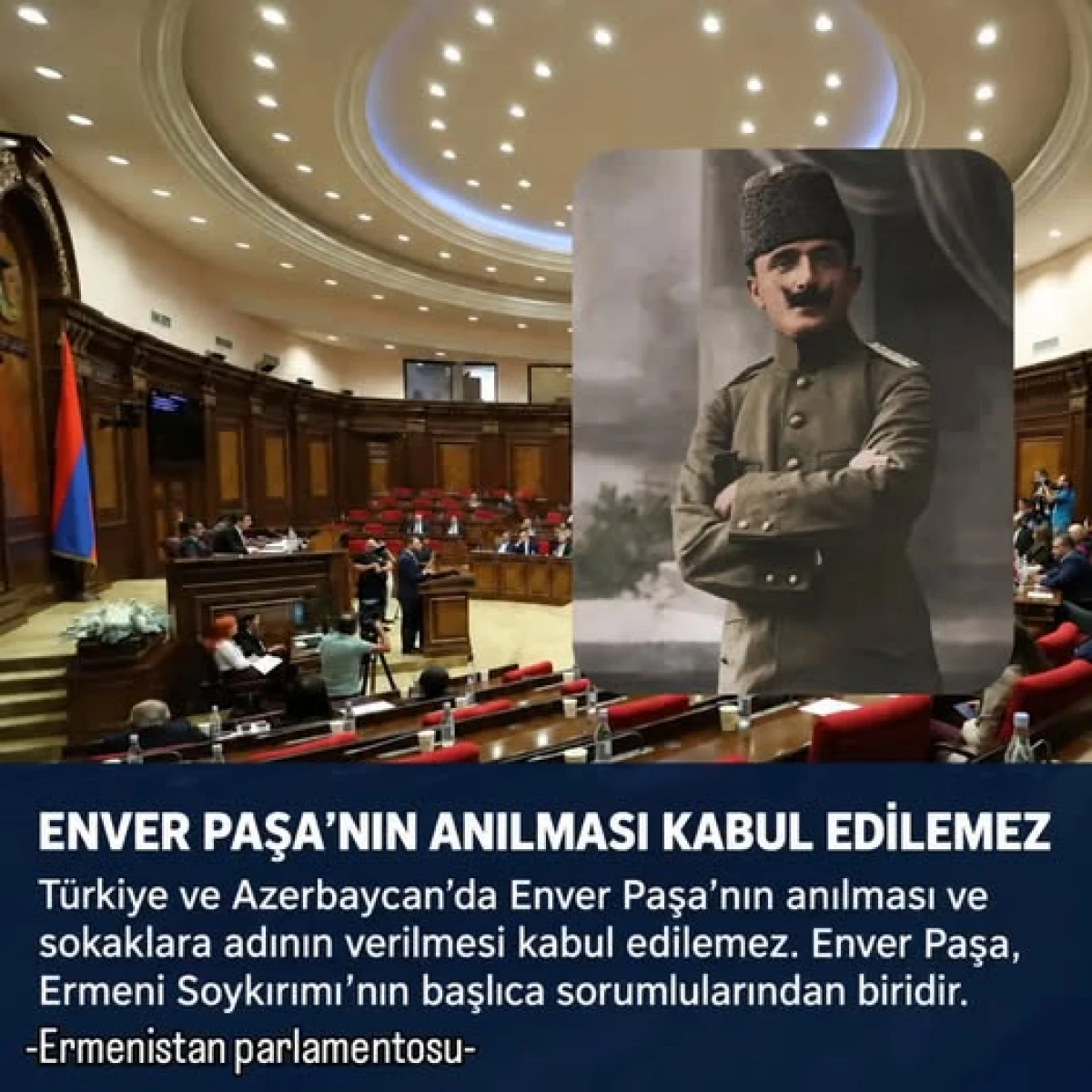
However, no decision or statement of this nature has been issued by Armenia’s official institutions or parliament. Therefore, the information presented in the post as the parliament’s official position has no verified basis. The fact that the AI-generated visual creates the impression of an actual parliamentary decision is particularly noteworthy in terms of its potential to mislead public opinion.
But why has this manipulation been built specifically around Enver Pasha’s name?
The roots of the issue lie in differences in historical memory. For the societies of Azerbaijan and Turkey, Enver Pasha is a great military commander who stood by us at some of the most critical moments in our history of independence. In 1918, when the newly established Azerbaijan Democratic Republic was facing the occupation of Baku by Bolshevik-Dashnak forces and a severe military and political crisis, the Caucasian Islamic Army was established through Enver Pasha’s decisive initiative. As a result of the historic order issued on April 5 and the campaign conducted under the command of Nuru Pasha, Baku was liberated from occupation on September 15. Two days later, on September 17, the government of Fatali Khan Khoyski moved from Ganja to Baku, and the city became our capital.
In Armenian circles, however, Enver Pasha is regarded as a controversial figure because of his position as Ottoman Minister of War and one of the leaders of the Committee of Union and Progress during the events of 1915.
It appears that certain parties are attempting to exploit these sensitive historical parallels to manufacture an artificial controversy. But the reality remains unchanged: Azerbaijan and Turkey embrace their history and honour the memory of figures whose contributions to the liberation of Baku were exceptional. Such fabricated news and AI-generated manipulation amount to little more than attempts to mislead public opinion.
Jala Rovshan