
Why won’t our neighbors forgive us? – ANALYSIS
This issue has long been a subject of discussion: what happened after the war? In particular, the number of developments directed against Azerbaijan increased. Azerbaijan also found itself facing new realities in various forms.
Naturally, this is often attributed to the emergence of new geopolitical realities in the region following Azerbaijan’s victory in the war. There is certainly a great deal of truth to this. But it should not be forgotten that Azerbaijan genuinely became a major power after the war, and victory has its opponents. Over time, we are seeing how accurate this assessment is.
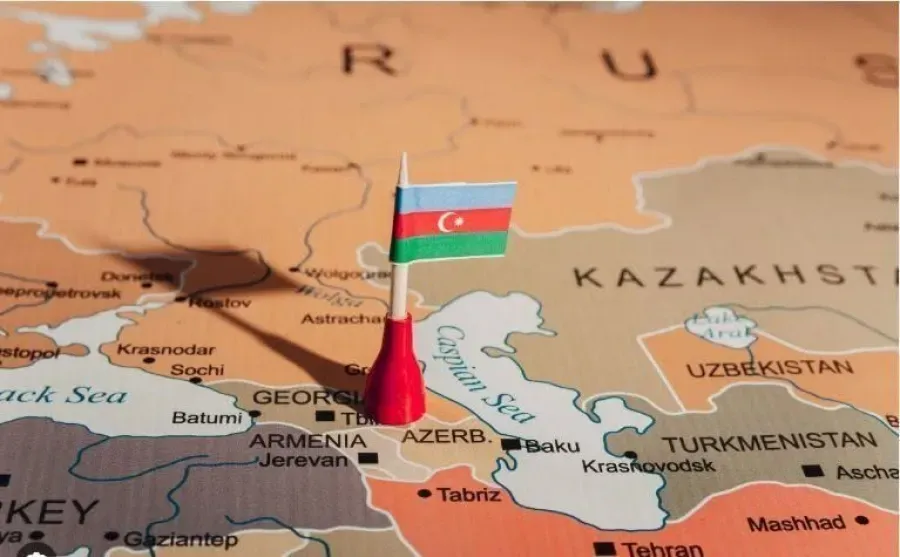
The realities become clearer when we look at the map of Azerbaijan. In 2020, Azerbaijan brought an end to nearly 30 years of occupation and regained its territories through its army, at the cost of the lives of its martyrs and major financial resources, despite international law being on its side.
Undoubtedly, given the conditions of the modern era and the current global order, this was an unprecedented event. The UN resolutions had remained on paper. But Azerbaijan successfully implemented those resolutions on the battlefield.
From that day onward, Azerbaijan rapidly moved away from its accustomed image as a defeated, helpless country whose territories were under occupation.
First, we should discuss Azerbaijan’s relations with its western neighbor, Armenia. It is well known that these relations are rooted in a major war and approaches that ultimately ended in defeat, including Armenia’s ambitions toward Azerbaijani territory. Armenia spent decades preparing to carry out the occupation of Azerbaijani territories.
We also saw at every stage and in every act of occupation that Armenia was not alone in this process. We saw how it was supported by major countries around the world and which global corporations provided it with financial backing. At the same time, when our army had not yet been fully formed, they carried out these operations using regular detachments, mercenaries and terrorist groups organized by global networks.
And we won the war comprehensively. In other words, this cannot be viewed solely as a matter concerning Armenia. And clearly, Azerbaijan in 2020 immediately asserted itself, regained its confidence and changed its foreign policy along the lines of that victorious spirit. This victory caused considerable jealousy and bias in the region.
Immediately afterward, we saw tensions with Iran, cooling relations with Russia, certain episodic disagreements with Georgia, resolutions adopted by European countries against Azerbaijan, and, at least among certain groups in Türkiye, anti-Azerbaijani positions.
This raises a serious question: why? After all, while we have not entered anyone else’s territory or interfered in anyone’s internal affairs, why are we facing what appears to be a chain of attitudes against Azerbaijan that overlap and seem to have a certain degree of synchronization?
In fact, there is a very simple answer to this question. But that answer also carries great responsibility. Nevertheless, it must be said and written:
We are right. They attack us because we are right.
They do not forgive us because we won. And however painful it may be, the spirit and logic of political rules clearly confirm precisely this position.
So, let us examine this process in detail, one by one.
Until 2020, Tehran viewed Armenia as its “enforcer” in the South Caucasus. Through Armenia, it saw a buffer zone separating Iran from Türkiye and Azerbaijan. More precisely, it was a buffer. And Tehran’s approach was shattered within 44 days.
Looking back, it becomes clear that Tehran’s strategy toward the north — regarding the Caucasus, Türkiye and Azerbaijan — is at least 200 years old. Thus, within 44 days, the 200-year-old policy Tehran had developed toward the South Caucasus was shattered.
This also leads to the conclusion that Iran has a negative attitude toward Azerbaijan because of its own interests. Every day, 30–40 million people in South Azerbaijan see the banks of the Araz, look toward Shusha and look toward Lachin. What about us? The Islamic Republic of Iran understands this obvious reality. That is why centers controlled by the IRGC sometimes hold exercises along the border in an attempt to turn the state border into a front line; sometimes they write threatening slogans on the mountains on the other side that can be seen from Azerbaijan; and sometimes they try to attack Azerbaijan through meaningless Israel-related narratives and statements.
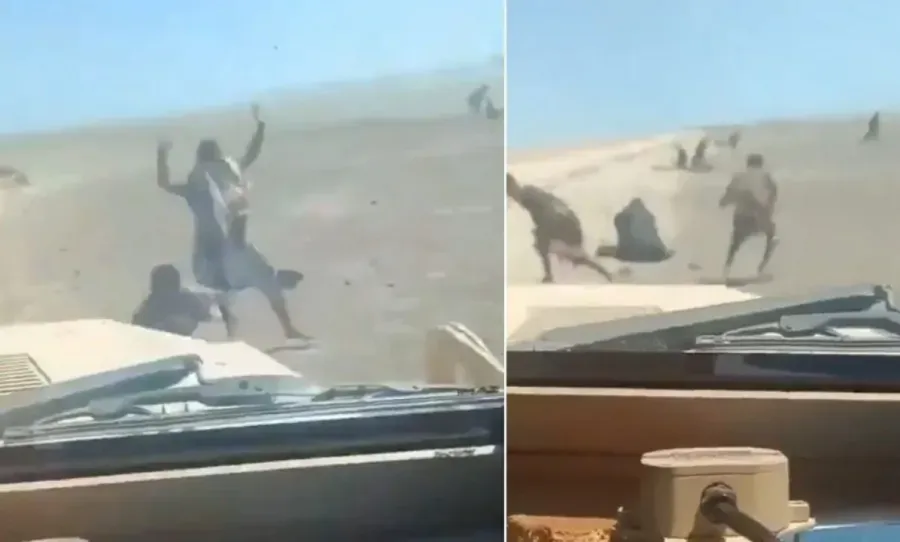
We are not wrong on this issue either. Even on the eve of the liberation of Karabakh, we exposed the fact that Iran was transporting weapons by trucks to Khankendi and illegally transporting fuel. Despite all this, Azerbaijan recorded Iran’s actions during those sensitive moments in its historical memory.
And today Iran is already facing a new reality: rather than the positions to which it moved its army six years ago, during the Patriotic War, on the northern bank of the Araz, it is now facing the reality of TRIPP, or the Zangezur Corridor. And it is forced to accept this.
Russia, too, has regarded the Caucasus as its “backyard” for 200 years. In 2020, Azerbaijan perhaps took the first such step among CIS countries: it began winning its war without seeking any permission from Russia. In 2023, despite the presence of Russian troops operating under the name of a civilian mission, Azerbaijan entered Khankendi. And in 2025, at Azerbaijan’s request, the Russian army ended its activities under the guise of peacekeeping and left Karabakh and Azerbaijan once and for all.
Of course, this is a trauma for Moscow. The Russian state and its history remember such events and will seek to settle the score when the time comes. But Russia fell into a psychological state trauma. And this demonstrated that while the Ukrainian front had turned into a quagmire for Russia, the South Caucasus had been lost by Russia. It was Azerbaijan’s victory and position in the South Caucasus that effectively demonstrated this to the world and to global players.
There is no doubt that we did not become enemies with Russia. But we are in the Caucasus, in the South Caucasus; Russia is not a South Caucasus country. And with the approach of “You go, we’ll take care of ourselves,” we effectively saw Russia off from the very door of the Russian House.
Azerbaijan resolved these processes through soft power and diplomacy. We did not shoot a single Russian soldier. We demonstrated how much stronger an agreement can be than bullets.
We have never had a problem with Georgia either. However, issues surrounding Keşikçidağ/David Gareja, problems concerning Azerbaijani schools in Borchali, and the failure to appoint Azerbaijanis to leadership positions in executive structures in Marneuli have repeatedly caused serious discontent. Tbilisi and Georgia must understand that realities have changed considerably. At least because around half a million Azerbaijanis live in Borchali, Georgia should value Azerbaijan more and appreciate its importance.
Georgia is heavily dependent on Azerbaijan in the east just as much as it seeks to move toward Europe. Sometimes this expression may not be entirely appropriate because it implies a strong form of dominance, but Georgia’s energy and economic dependence on Azerbaijan is one of the factors enabling Georgia to remain politically independent from Russia. Otherwise, it would have turned into a Russian outpost.
We have never been unjust in our attitude toward Georgia. Azerbaijan has supported Georgia on the issues of Abkhazia and South Ossetia. And Georgia reaches the Europe it so strongly aspires to be part of through Azerbaijan as well. Without Azerbaijan’s gas, electricity and oil, Georgia would not be a country occupying a transportation point of any particular significance to Europe.
Europe is struggling with a very strange kind of contrary psychology. They need our oil, and it is genuinely difficult to understand these “teachers of democracy” who depend on our oil. The French Senate adopts resolutions, the European Parliament condemns us, and all of this has the factor of the 30-year occupation at its root. Yet that same Europe bears responsibility for the 30 years of failed activity of institutions such as the OSCE Minsk Group. And, frankly, in our view, the assessment of Europe’s political activity in this process can be summed up in one sentence: its approach failed very seriously over the course of those 30 years.
There is another important issue: Europe cannot obtain gas from Russia, and this creates enormous frustration in Europe. But Western countries have a level of hypocrisy that is difficult to comprehend. Imagine that they are heavily dependent on Azerbaijan for energy resources, yet their rhetoric is based both on “we need you” and “we are angry with you.”
And they demand that Azerbaijan not defend its own rights, and that even when various resolutions are adopted, Azerbaijan should not express an opposing view toward Europe. There is no logic that can be understood here. How so?
We sell gas to Europe. Europe should be grateful to us for not sending migrants there. If homes in Brussels are heated in winter and 10 percent of that heating comes from Azerbaijan, then Azerbaijan should be thanked for it.
We are brothers with Türkiye, and there can be no measure for this brotherhood. However, each of the two countries has its own interests. We are united by issues such as the Middle Corridor, the Zangezur Corridor, TRIPP, customs duties and the passage of trucks, and we move forward in a coordinated manner. But the unjustified claims of certain circles in Türkiye, the perception of Azerbaijan as a smaller country, and positions expressed in ways that are difficult to understand and that could hurt Azerbaijan have caused certain episodic disagreements.
Overall, one fact has been confirmed: after 2020, Baku became the regional leader and a middle power. Today, with the Central Asian republics at the forefront, Baku is the political center and decision-maker for many countries in the region.
This has also happened throughout history: when a strong state emerges, everyone unites against it. Azerbaijan has faced such tendencies throughout its long history. A regional political environment seems to have emerged that wants to see the Azerbaijani people as perpetually tearful and defeated. It wants the country to pursue a permanent policy of defeat, create an image of itself in the world through images of refugees, and have its name associated with refugee camps and people living in mud and rain in miserable conditions, remaining trapped within that framework.
Azerbaijan has won. The more rational approach would be to congratulate it, stand by it, share the energy of this victory and apply it to development and prosperity in the region. But we are seeing the complete opposite.
This is a victorious nation, and once this victorious nation has tasted the bread of victory, the course of events changes, and relations with it cannot be conducted in military terms.
History genuinely shows that nations that are right and emerge victorious are always subjected to such temporary, episodic attacks. But in the long term, others are forced to come to terms with them. Because no foreign state can have the final say regarding Azerbaijan. This is because statecraft and strategic power give us the ability to neutralize the opposing front within a short period of time.
That is why Azerbaijan is being reckoned with today. Today, the world’s major powers are reckoning with the President of Azerbaijan at a point where the future of the world is being shaped. This applies to the Zangezur Corridor, the Middle Corridor and the future of Europe.
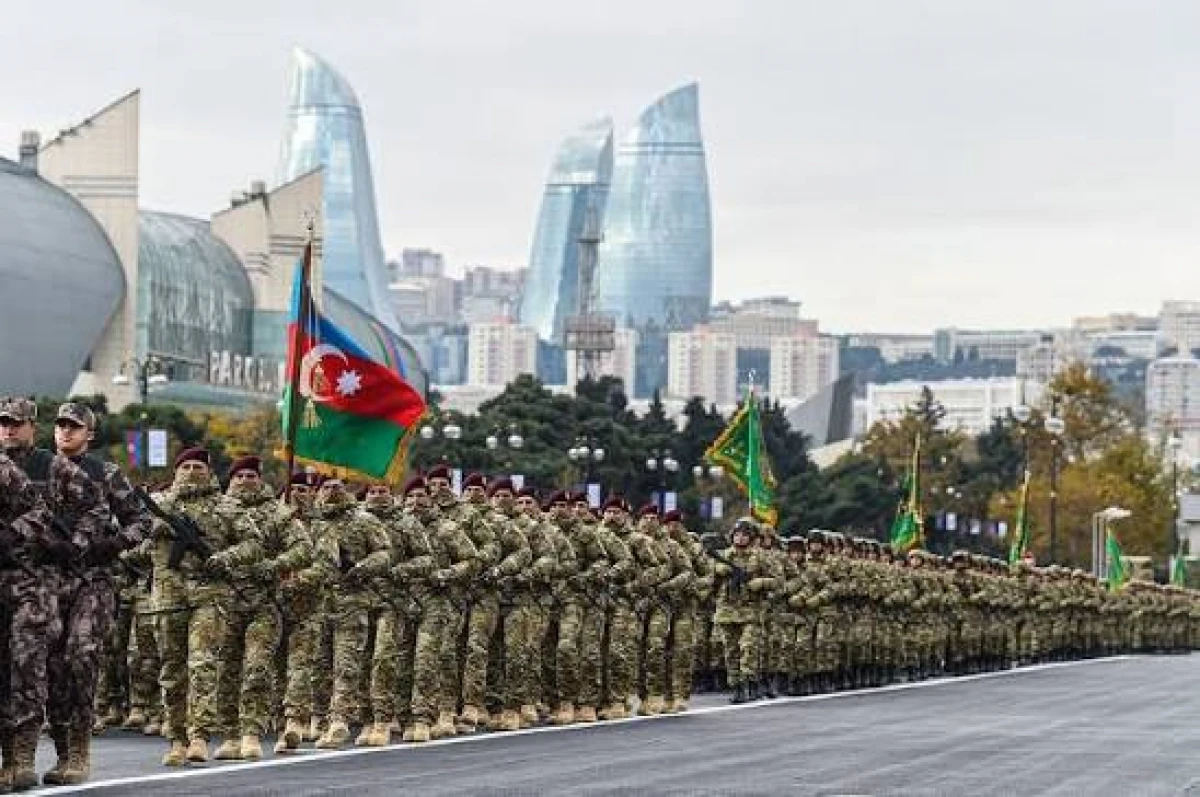
And most importantly, Azerbaijan also possesses the military capabilities to protect the opportunities it has gained, sustain them over the long term and put them into practice for years to come.
Political commentator Aziz Alibeyli