
Is the problem Putin, or Russia’s determination to remain an empire?
There are phrases that sometimes explain an entire era better than dozens of political analyses.
“For them, Russia may be bad, but it must remain Russia.”
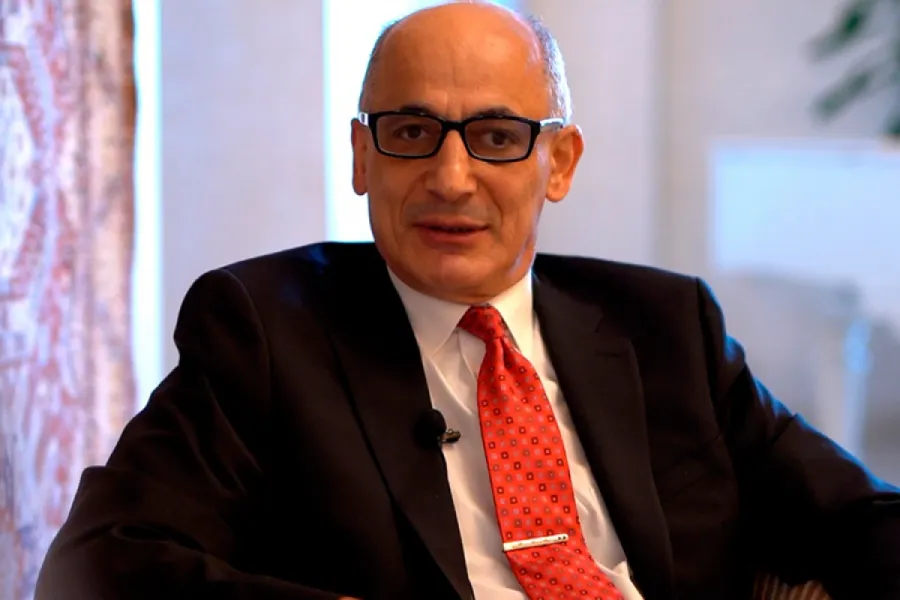
In my view, this formula best explains the current controversy surrounding Dmitry Muratov. We are talking about a Nobel Peace Prize laureate, one of the key figures in modern Russia, and one of those so-called “moral authorities” who have grown accustomed to being perceived in the West as representatives of a democratic Russia.
The developments that have come to light in recent days are highly revealing.
According to The Atlantic, the idea of using the release of Russian political prisoners as a basis for gradually easing US sanctions against Russia emerged after a meeting between US President’s Special Envoy Steve Witkoff and Dmitry Muratov. Muratov, who had been trying to establish contact with Witkoff for a long time, told him about the Soviet-era experience of securing the release of dissidents and provided materials on Russian prisoners. Witkoff subsequently brought the idea to Donald Trump. According to the publication, Trump agreed to explore such an approach. For now, however, the matter concerns only a proposal and the initial stages of a possible mechanism. The Kremlin, meanwhile, has already stated that no such negotiations are taking place and denies the very existence of political prisoners in Russia.
Let me emphasize the main point from the outset: the release of political prisoners is undoubtedly a positive development. But the real issue lies elsewhere.
Why should the release of Russian political prisoners serve as grounds for easing pressure on a state that continues to wage war against Ukraine?
Why should sanctions, one of the instruments of pressure on the Russian state, suddenly become the subject of a separate bargain? And why is Ukraine’s fate being overlooked in all of this?
This is precisely where the interesting part begins.
Let us assume that Mr. Muratov genuinely and sincerely wants to secure the release of these people.
But the sincerity of an individual does not automatically make the political mechanism he proposes fair to others, especially Ukraine.
Ukraine has already declared that it opposes lifting sanctions until the war is over. This is hardly surprising: restoring economic ties with Russia is not simply a matter of embracing a pleasant-sounding word such as “peace.” It potentially means additional resources for a state that is continuing to wage war.
Yet what interests me in this case is not even Muratov himself. I am interested in a much deeper phenomenon: so-called Russian liberalism.
More precisely, the segment of Russian society that has spent decades claiming the right to speak on behalf of a future “democratic Russia.” Because here we encounter a remarkable paradox.
It is possible to oppose Putin, demand the release of political prisoners, condemn repression, defend freedom of speech, move to the West and tell Western audiences about the Kremlin’s crimes, and even sincerely support Ukraine. But none of this answers the fundamental question: what do you think about the empire?
This is where the real test begins.
Is the problem Putin, or Russia itself, which continues to exist as an imperial political project?
We are not talking about a particular regime, but about Moscow’s historical habit of treating the surrounding territories as a zone over which it has special rights.
The issue is not merely the freedom of Russians, but also the freedom of Ukrainians, Georgians, Moldovans, Azerbaijanis, Armenians, Chechens, and all the other peoples of the former empire to determine their own destinies independently.
And this is precisely where a significant part of Russian liberal thought runs into trouble.
Because no matter how many times you change the occupant of the Kremlin, if the belief that Russia has special rights in the post-Soviet space remains intact, power may change hands, but the underlying political mindset does not.
Let us look at history.
Mikhail Gorbachev was awarded the Nobel Peace Prize for his role in ending the Cold War and fundamentally transforming relations between East and West. Yet this does not erase the fact that, under his leadership, Soviet authorities used force against their own populations, spilling blood in various parts of the USSR, including Tbilisi and Baku. The Nobel Committee, however, was assessing primarily his international role, not the full consequences of his domestic policies.
Andrei Sakharov, meanwhile, was a far more complex figure.
One of the creators of the Soviet hydrogen bomb and a scientist who had initially enjoyed the Soviet system’s favor, he later became one of that system’s most prominent critics and a human rights advocate. In 1975, Academician Sakharov was awarded the Nobel Peace Prize for his struggle for human rights, disarmament, and international cooperation.
Yet, for some reason, when the issue of separatism in Karabakh was discussed, this so-called “moral authority,” together with his wife, Yelena Bonner-Alikhanyan, supported the position of Armenian separatists. His stance was unequivocally pro-Armenian and had extremely painful consequences for Azerbaijan. Ultimately, that position contributed to the loss of numerous lives in this conflict.
This raises another question: how can someone become a universal “moral authority” for everyone without fully addressing the universality of the principle of human freedom?
If freedom is a value, it cannot be limited to Russians freeing themselves from their own state. It must also encompass the freedom of neighboring peoples from the Russian state. Russian liberal thought, to a considerable extent, has failed precisely this test.
Mr. Muratov is particularly interesting because he represents a different generation. He is neither Gorbachev nor Sakharov. Nevertheless, the episode involving Witkoff demonstrates how an old problem is resurfacing in a new form: Russian political prisoners are placed at the center of a moral narrative, while Ukraine is relegated to the background.
And that is precisely the most painful part.
Because since February 24, 2022, it has been impossible to discuss Russian policy as though the war did not exist. Nor can the fate of Russian political prisoners be discussed in a political vacuum.
If easing pressure on an aggressor state is being proposed before the war has ended, then Russia’s domestic struggle for freedom cannot be separated from its external aggression. Doing so behind Ukraine’s back is particularly unacceptable.
The most interesting aspect here is the reaction of that very Russian liberal milieu.
As soon as information about the proposed mechanism emerged, the familiar image of Muratov as a moral authority began to take shape once again. And this raises a question I would like to address to all these “good Russians”: why are you so quick to defend an individual’s moral standing, yet so rarely attempt to defend a principle that should take precedence over any Russian moral authority?
Ukraine must not become a bargaining chip.
Its territory, security, right to exist, and right to determine its own future independently cannot be treated as additional conditions in negotiations between Washington and Moscow. Above all, they must never become the price paid for resolving Russia’s domestic problems.
This is where the true nature of the problem becomes apparent.
For these “good Russians,” Russia may be bad, but it must remain Russia. They operate according to the principle: “He may be a son of a bitch, but he is our son of a bitch.”
Russia can be Putin’s Russia — that is bad. It can be Yeltsin’s Russia — that is already better. It can be Gorbachev’s Russia — better still. Russia could even become a democratic country. As long as it remains Russia in the traditional historical sense: a great power with its own sphere of influence. That, in essence, is what these “moral authorities” of modern Russia are all about.
Yet the idea of Russia declaring, “Ukraine, Georgia, Moldova, Azerbaijan, Armenia, Belarus, and the countries of Central Asia are not our sphere of influence. Many representatives of the peoples subjugated within Russian territory also have the same right to sovereignty that we demand for Russia,” is an acknowledgment that many Russian liberals have, for some reason, still been unable to make.
That is why the problem goes far beyond Putin. President Putin is an individual and the head of a political regime; imperial thinking is an entire system.
It is possible to remove Putin while preserving the system. It is possible to hold elections and keep the system intact. It is possible to release political prisoners and preserve the system. It is even possible to build a democratic Russia while maintaining the system — provided that democracy applies only within Russia, while “special interests” continue to prevail beyond its borders.
In that case, what we will see is not a new Russia, but an old empire concealed behind a new facade. That is precisely why I understand why the current controversy surrounding Muratov has provoked such different reactions in Russia and Ukraine.
For part of the Russian liberal world, this is a humanitarian initiative. For Ukraine, it is a matter of war and security.
For me, however, this is first and foremost a litmus test of Russia’s post-imperial consciousness. And once again, it exposes a deeply uncomfortable truth: some of those who want to free Russia from Putin have still not found the courage to free Russia from its imperial legacy. Without that, all talk of a “new Russia” amounts to little more than changing the scenery.
Because a truly democratic Russia will one day have to openly declare something that Russian liberal thought has spent decades avoiding: Russia’s freedom ends where another nation’s freedom begins. If easing pressure on a state that is killing Ukrainians is deemed necessary in the name of Russian freedom, then this is no longer universal morality. It is a hypocritical morality limited by national identity. At that point, everything becomes perfectly clear.
For Mr. Muratov and the “good Russians,” modern Russia may be bad, but it must remain a Russia that preserves its imperial mindset. This means that faces, slogans, presidents, and “moral authorities” may change, but the empire must live on.
As Winston Churchill once said: “An appeaser is one who feeds a crocodile, hoping it will eat him last.”
Ramiz Yunus
Professor of Political Science, Khazar University