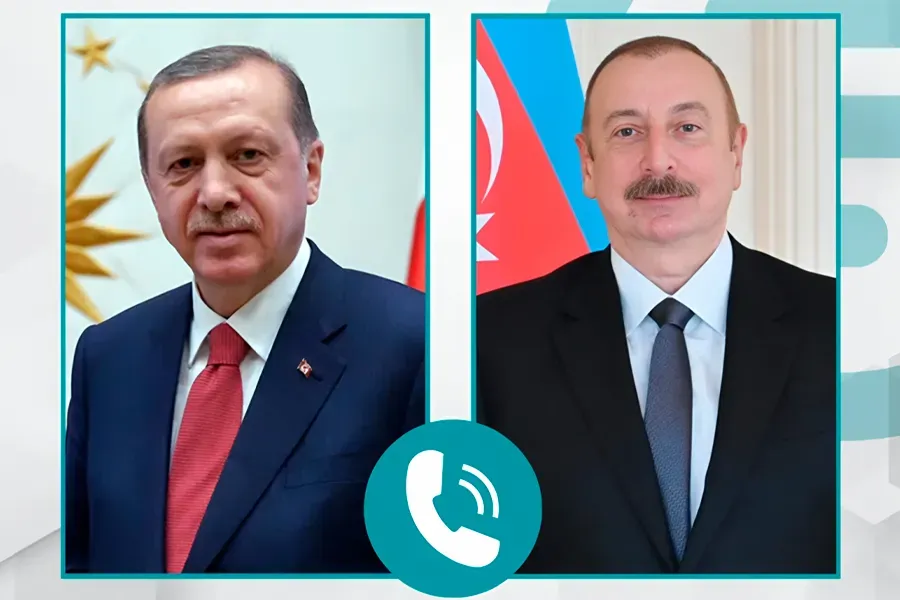

President’s remarks spark concern in Yerevan – ANALYSIS
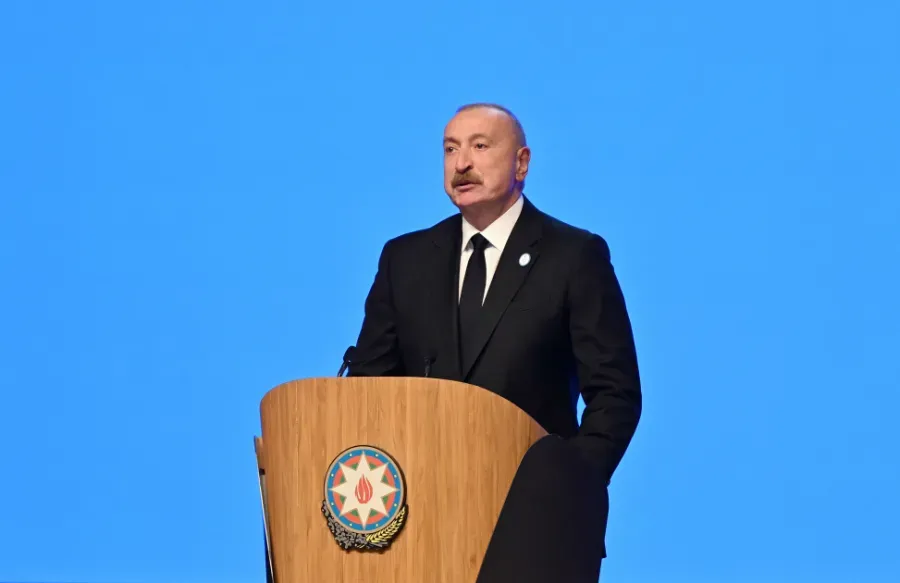
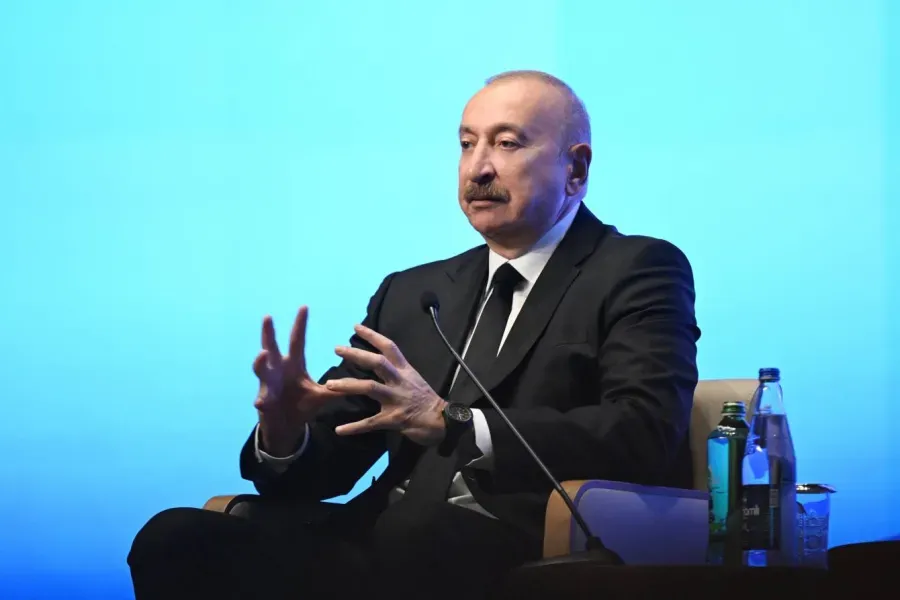
Speaking at the 8th Congress of the New Azerbaijan Party, held at the Heydar Aliyev Center on October 2, President Ilham Aliyev emphasized that this was the first congress to take place after Azerbaijan had fully restored its territorial integrity and sovereignty.
The head of state recalled that Armenia’s current leadership had also made territorial claims against Azerbaijan in the past and issued statements that offended the dignity of the Azerbaijani people, adding that such actions must not be forgotten. The central message of his speech was that the blame cannot be placed entirely on Armenia’s previous leadership, even though all of those leaders are war criminals who must face justice.
To understand why this reminder was made at this particular moment, it is necessary to look at the developments of the past month. In September, tensions between Baku and Yerevan rose again. A total of 150 diplomats from 58 countries accredited in Azerbaijan visited Karabakh. Presidential aide Hikmat Hajiyev presented the Gandzasar and Khudavang monasteries to them as integral parts of the ancient Christian heritage of Caucasian Albania. The visit triggered a strong reaction in Armenia. Some politicians demanded a forceful official response from the country’s leadership, while the situation was described as a serious crisis that could slow the peace process. Bridges built at the civil society level also froze: an expert meeting scheduled to take place in Yerevan under the “Bridge of Peace” initiative was postponed at the request of the Azerbaijani side until tensions subside.
Against this backdrop, remarks made by Pashinyan from the UN podium were closely followed in Baku. On September 25, the prime minister included the fate of missing persons, demining, and the return of Armenians detained in Azerbaijan among the unresolved issues in his address to the General Assembly. He said that competing narratives surrounding historical and cultural monuments were creating pessimism, stressing that the progress already achieved should take precedence over these disputes. Pashinyan’s attempt to present himself to the international audience as an architect of peace prompted a response from Baku.
Three key messages can be discerned beneath the surface of the speech.
The first challenges the political image Pashinyan has cultivated for years. The Armenian prime minister built his legitimacy on breaking ties with the “Karabakh clan” and placing the entire burden of the 30-year conflict on the Kocharyan and Sargsyan administrations. Yet it was Pashinyan himself who declared in Khankendi in August 2019 that “Artsakh is Armenia, period,” and who led Armenia during the 2020 war. By recalling these facts, President Aliyev is refusing to grant Pashinyan a moral amnesty. From Baku’s perspective, today’s constructive approach does not automatically erase the conduct of previous years.
The second message concerns institutional guarantees. Baku’s official position has remained unchanged for a long time. President Aliyev said as early as February in Munich that a peace treaty could be signed the day after Armenia made the necessary amendments to its Constitution. He also described the Washington agreements and the initialing of the treaty as de facto peace. The problem is that this path now appears to be blocked. In the parliamentary elections held on June 7, the ruling Civil Contract party failed to secure a constitutional majority. This means it lacks the two-thirds majority required to call a referendum on a new constitution. In these circumstances, Baku’s reasoning is clear. Recalling Pashinyan’s past claims is a way of highlighting the risks of relying on his personal intentions and demonstrating that trust can only be secured through a legal document.
The third message relates to the broader geopolitical picture. The influence of external actors in the region is now clearly visible. The United States believes it is still too early to begin construction of the Trump Route, which would connect Nakhchivan with mainland Azerbaijan, given the project’s technical complexity and geopolitical sensitivity. Armenian analysts also note that the US midterm elections could change this policy, that Russia is seeking to obstruct the TRIPP project, and that Iran has made no secret of its intention to prevent the project from being implemented under an American framework. Amid growing uncertainty, Baku is demonstrating that its position does not depend on the mood of mediators. President Aliyev’s statement during the same speech that strengthening military power is one of the country’s main priorities, along with his emphasis on Azerbaijan’s emergence as a significant geopolitical and security factor, reinforces this approach. Peace is maintained from a position of strength, sending a clear signal to both Armenia and its foreign partners.
The description of Armenia’s former leaders as war criminals and the insistence that they must face justice deserve particular attention. Pashinyan’s reference at the UN to Armenians detained in Azerbaijan and Baku’s open commitment to its justice agenda represent two opposing positions. With this, the Azerbaijani leadership is making clear that accountability for crimes committed during the conflict will not become a bargaining chip in exchange for a more favorable diplomatic atmosphere.
What can be expected next? First and foremost, tough rhetoric does not necessarily mean the process is collapsing. Pashinyan himself has acknowledged that no one has been killed or injured in border shootings over the past two and a half years. Bilateral trade has begun, Azerbaijan is exporting petroleum products to Armenia, and grain and other cargo from third countries are being transported through Azerbaijani territory to Armenia. These practical ties will not be easily severed. The most realistic scenario is a prolonged state of “de facto peace, de jure pause.” As long as the constitutional issue remains unresolved, Baku will continue to exert pressure by invoking political memory, while Yerevan may seek a legal formula that does not require a referendum. The likelihood that Baku would accept such a formula is low, as Azerbaijan has repeatedly stated that future Armenian governments must not be able to challenge the legitimacy of the document.
In the coming months, the battle over competing narratives is likely to intensify further. Historical heritage, monuments, past statements, and accountability will move from diplomatic discussions into the public arena. The reminder delivered today from the Heydar Aliyev Center is also part of this struggle. Baku’s message to Pashinyan is simple: it will not be possible to place the entire burden of the past on his predecessors, and the final seal on peace will come not through words, but through amendments to Armenia’s Constitution.
Aziz Alibeyli, International Relations Researcher