
How can we prove to Armenians that the Albanian heritage belongs to Azerbaijan?
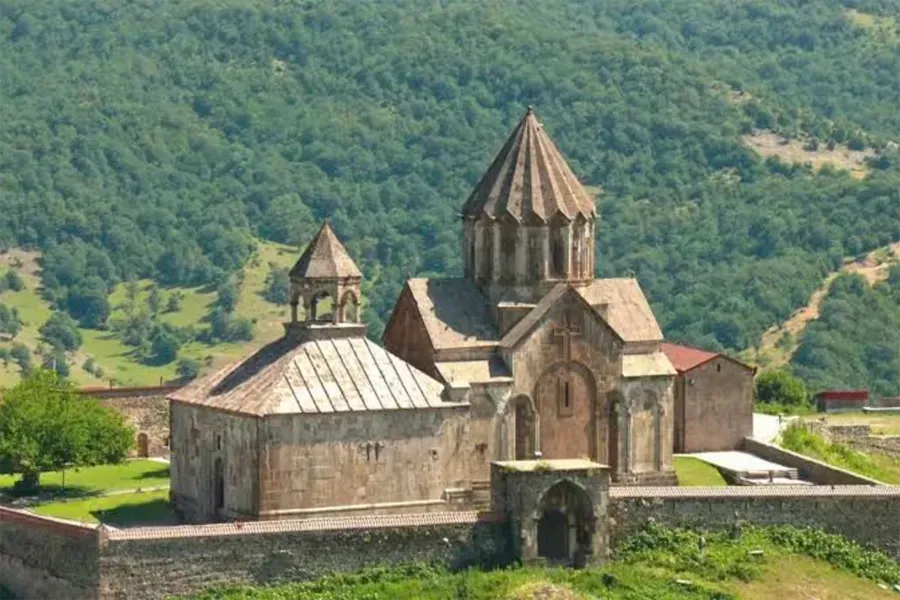
It is of vital importance that the historical Albanian heritage be recognized and promoted globally as cultural heritage belonging specifically to Azerbaijan. This step goes beyond preserving the integrity of our national, ethnic, religious and cultural past. Presenting Albanian monuments and spiritual values as an integral part of Azerbaijani-Turkic civilization carries profound strategic significance.
Armenia's attempts to claim the historical Albanian heritage are well known. Their claims concerning the history and cultural heritage of Caucasian Albania are largely based on the thesis that this heritage directly belongs to the Armenian people, the Armenian Church and Armenian culture.
So, how can we prove to Armenians that the Albanian heritage belongs to Azerbaijan?
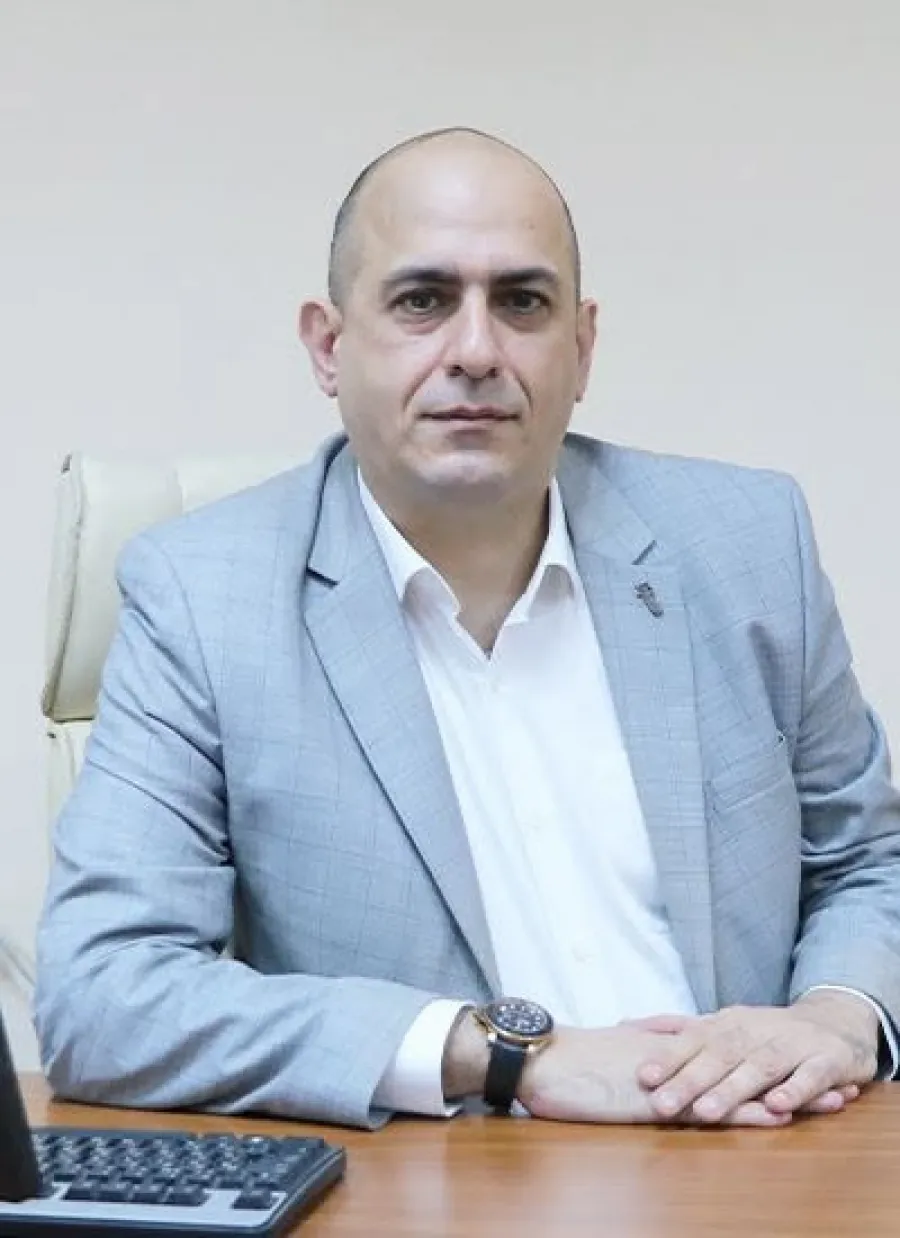
Speaking to TodayPress TV, historian Zaur Aliyev first noted that Albania was among the countries where Christian communities emerged long before the fourth century, at a time when Christianity had not yet become the state religion:
“In the early centuries AD, the first Christian missionaries from Jerusalem and Syria, as well as apostles and their disciples, came to Albania, where the first Christian communities were established. The arrival of Saint Thaddeus, one of the disciples of Jesus Christ, in Albania and his missionary activities there are mentioned in numerous historical sources. Various legends later emerged about the apostle, who was killed there. The Armenian historian known as Moses of Kalankatuyk, whom Armenians have fabricated, also used this fact in his own way, claiming that the church was founded by Armenians. However, a number of sources state that Armenians did not live in this area at that time.
From the beginning of the 19th century, Armenians who settled en masse in the South Caucasus began using these examples of Albanian culture. In an effort to create an image of an ancient people and thereby demonstrate that Armenians were older and superior to other peoples and nations, they began developing their own culture, religious symbols and crosses.”
According to the historian, the first target was to allocate substantial funds to numerous projects aimed either at completely destroying or altering the forms of cross symbols dating back to the Albanian period in the territories of Karabakh and Western Azerbaijan:
“During the Soviet period, the process of Armenianizing Albanian crosses began not only in Karabakh and Western Azerbaijan, but also in other areas where Albanian churches existed. They did not limit themselves to altering these crosses, but also began adding inscriptions in the Armenian language to the walls.
For example, an incident that occurred in the Kalbajar area two years ago exposed Armenia's activities in this direction. Armenians presented a church decorated with Albanian crosses in the Kalbajar area as an Armenian monastery. Not stopping there, they wrote words in the Armenian alphabet on the stones of the monument and attempted to present them as inscriptions dating back centuries.
However, the social media video they produced was exposed by Russian researchers specializing in the history of Albania.”
Zaur Aliyev also said that Armenian “khachkars” began to emerge during the periods of Tsarist Russia and Bolshevik Russia:
“In fact, the root of the word ‘khachkar’ is of Persian origin and entered the Armenian language from Persian. In Persian, this word means ‘work’ or ‘labor’. In Armenian, however, the word ‘kar’ is understood to mean ‘stone’. Therefore, the meaning of the word ‘khachkar’ in Armenian is ‘cross-stone’.
Robert Mobili, chairman of the Alban-Udi Christian Community, also made a specific statement on the matter:
‘They have falsified monuments belonging to Albanian cultural heritage and the Udi people, presenting them as Armenian churches. Armenians have changed the inscriptions and crosses on churches. This is clearly visible. The crosses of Albanian churches are different.
The Albanian cross is the only cross in the world that contains symbols reflecting pre-Christian beliefs and perceptions of the universe. All compositions of these crosses reflect the connection between heaven and earth, as well as the symbolism of the sun, light, radiance and fertility. The stone monuments bearing Albanian inscriptions contain distinctive depictions governed by religious and artistic principles, in which pre-Christian beliefs and the forces of the universe are arranged according to a particular order. Such features are absent from the cross depictions of other peoples.’”
It is particularly noteworthy that Iranian officials are also making serious efforts to prove that temples belonging to the Albanians are Armenian. Iranian officials even claimed at the 32nd session of UNESCO, held in Quebec City, Canada, that three churches located near the Maku district of South Azerbaijan belonged to Armenians, and the monuments were subsequently included in UNESCO’s cultural heritage list. In short, our historical temples belonging to the Albanians are being Armenianized, while the Azerbaijani side remains silent about this.”
Zaur Aliyev also spoke about the importance of establishing an Albanian Apostolic Church in Azerbaijan:
“We need to reclaim our history. The Albanian Apostolic Church was incorporated into the administration of the Armenian Gregorian Church under the Statute of the Russian Senate dated April 10, 1836, based on the decree issued by Emperor Nicholas I on March 11, 1836. We must correct this historical mistake. The strongest weapon against Armenia’s years-long policy of ‘Armenianization’ is indisputable scientific evidence.
Projects concerning the Christian heritage of the South Caucasus should be carried out together with renowned universities around the world and neutral historians, for example, Orientalists from Europe and the United States. Excavations at Albanian temples, as well as anthropological and DNA analyses of ancient graves discovered there, should scientifically prove that the ancient inhabitants of these territories were not Armenians, but local Albanian tribes. These findings should be published in high-impact international academic journals.”
The historian stressed that the unique architectural features of Albanian monuments in Azerbaijan, as well as those remaining in Armenia, should be registered and protected within the framework of UNESCO, including features such as the fact that the khachkars derive not from Armenian cross-stones but from Albanian-Turkic elements:
“The restoration of Albanian temples in the liberated territories, which are reported to have been falsified by Armenians and subsequently supplemented with Armenian inscriptions, should be carried out under the supervision of international experts, and these alterations should be documented. It is reported that the historical Albanian Church was abolished by Tsarist Russia in 1836 and subordinated to Etchmiadzin. The legal and religious status of this church should be fully restored at the international level.
High-quality documentaries about the architecture and culture of Caucasian Albania and attempts by Armenia to appropriate this heritage should be broadcast on global platforms such as Netflix and Discovery. Books, articles and YouTube projects objectively explaining the history of the Albanian heritage, its architectural features and the essence of the 1836 decree issued by Tsarist Russia should be prepared in the Armenian language. The intellectual segment of Armenian society should be able to familiarize itself with materials on these issues in its own language.”
Giymat Mahir
PHOTOS