
Is the Azerbaijani people ignorant?
Of course, it would be wrong to view and assess a nation in this way. However, the performance of a certain segment of this society can make one think along these lines.
As a nation, we have very strong national and moral values if we uphold them, sincerely adhere to them and do not mix them with other agendas.
But because the ideological pillar has been broken, the flow of ideas that once held society together under a single roof has fragmented, turning into a field in which everyone acts individually.
Suppose a discussion is opened about religion. It will immediately turn into an aggressive confrontation.
Or, national identity has been emphasized so incorrectly that instead of bringing people together, it has slipped into ethnic separatism.
Social media is overflowing with ethnic separatists waging a campaign against Azerbaijan from abroad. As a result of the degradation of the intellectual institution, the vast majority of those whom we have become accustomed to viewing as representatives of that image have fallen into acting as influence agents for special groups. When it comes to religion, strange movements have emerged, and by bringing issues that a conscious person would never even think of into public discussion, they are damaging the moral integrity of society.
Social media is also full of fortune tellers, shrine fraudsters and con artists.
As for the institution of elders, its image has become ridiculous and a subject of mockery.
When it comes to family values, there is almost no family left...
Moral decline has returned to the level of the 19th century, with the characters of that era having become so numerous that they can be encountered in real life today.
And this is where the question arises:
Are we ignorant?
It is true that the academic equivalent of the term “ignorant” is measured according to one’s educational status, but in our sociological sense, it means much more than that.
There are plenty of people who are educated and knowledgeable, yet still ignorant.
On paper, Azerbaijan is one of the most literate countries in the world: official statistics state that 99.8% of the population can read and write. However, this figure measures merely the ability to recognize letters.
The key criterion in the modern world is literacy; and when we go deeper, moving toward critical thinking and analytical reasoning, the reality is completely different.
Six out of every 10 adolescents fail to cross the basic threshold
The results of the Programme for International Student Assessment (PISA) provide the most stark numerical diagnosis of our education system:
Azerbaijani students scored 365 points in reading literacy. For comparison, the average score among members of the Organisation for Economic Co-operation and Development (OECD) is 476. The 111-point gap corresponds to approximately three to four years of educational disadvantage. In mathematical literacy, our score is 397, compared with the OECD average of 472 (a gap of -75 points).
Science: The country’s score is 380 points, while the international benchmark is 485 (a gap of -105 points).
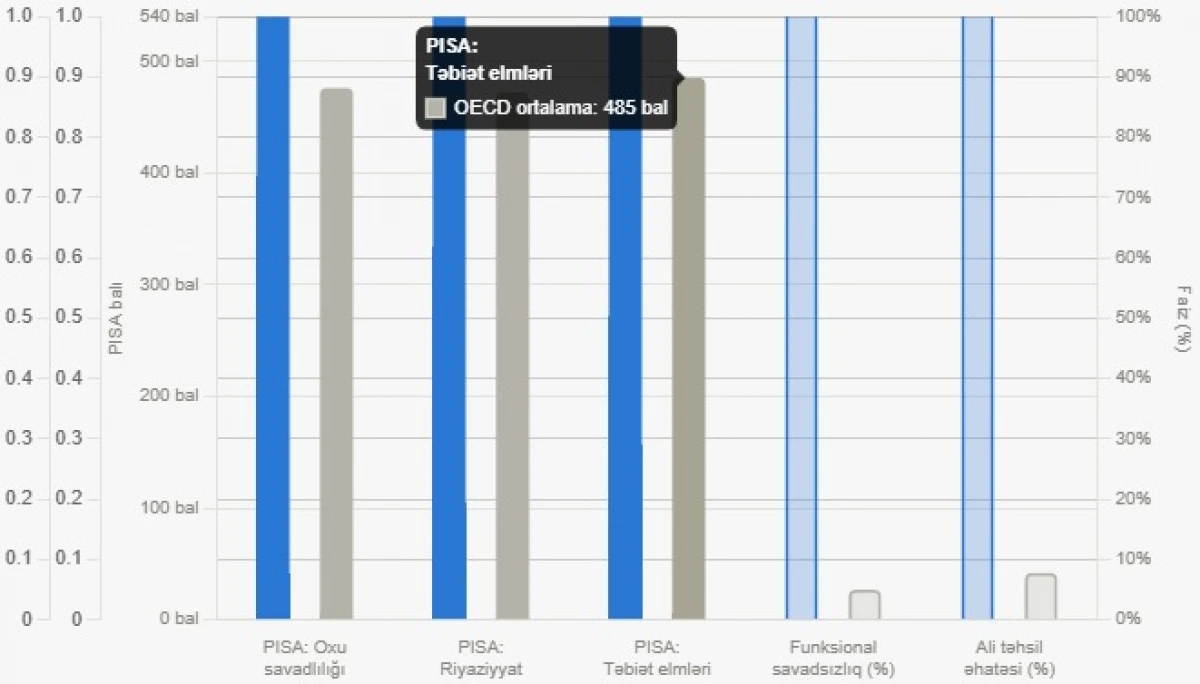
Basic functional illiteracy: 60–65% of our students fail to reach Level 2, the basic threshold, in reading and scientific understanding. In the OECD, this figure is around 25–30%.
This means that more than half of schoolchildren are unable to identify the main idea in a complex text they have read, establish a logical cause-and-effect relationship between two facts, or distinguish manipulative information from the truth.
The same structural crisis is repeated at the stage of preparation for higher education. Annual statistical reports from the State Examination Center (SEC) show that:
35–40% of university applicants taking entrance examinations barely exceed, or fail to cross altogether, the minimum threshold of 150–200 points required for selecting a field of study.
Every year, thousands of graduates score zero or negative points in mathematics and foreign languages.
While the share of the population with higher education in the country stands at only 20–22% (OECD average: 40–45%), a large proportion of that 20% also lack the functional skills required by the labour market.
A population that does not read a single book a year and its social consequences
The book-reading rate is less than one book per person per year (in developed countries, the figure ranges from 6 to 12 books). The score of 380 points in science, regarded as the foundation of logical and scientific thinking, has a direct impact on society:
Society tries to address medical problems not through science but through alternative methods, falls victim to fraudulent religious and financial traps on social media, and is unable to apply a critical filter to fake news. The deep gap between the official figure of 99.8% literacy and 60% functional illiteracy is glaring.
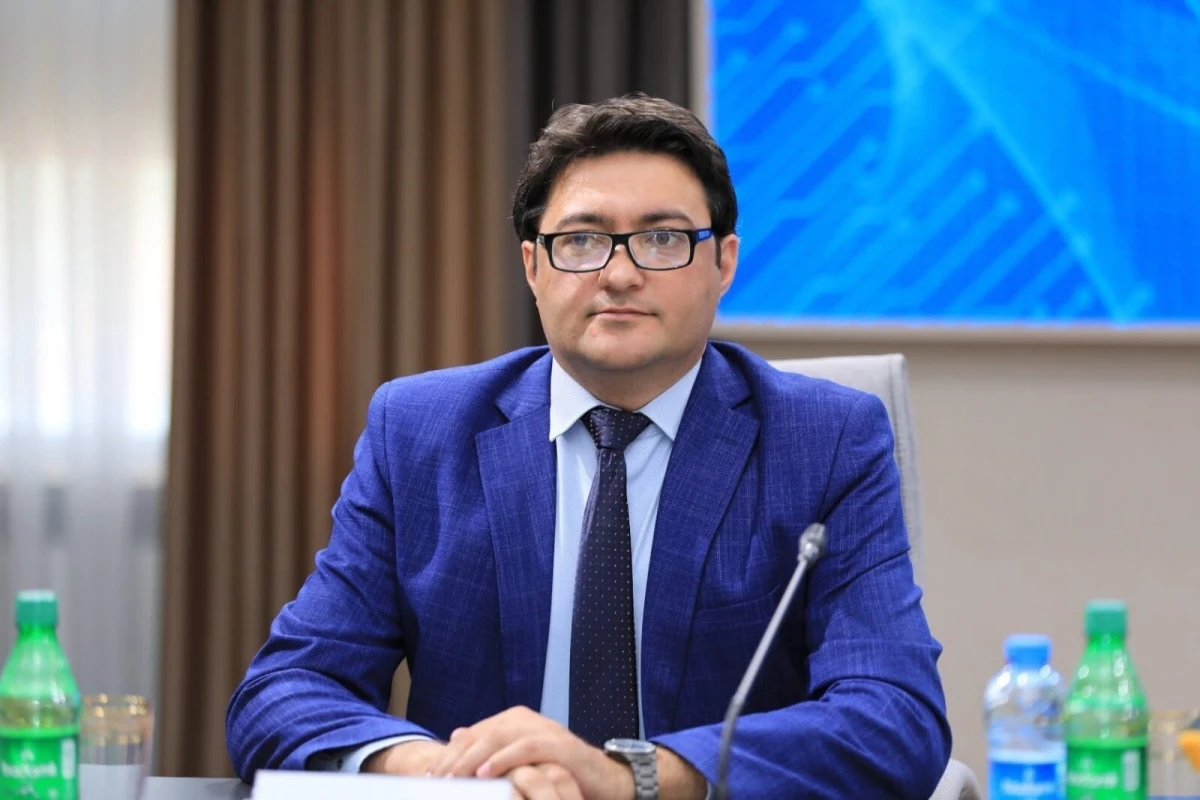
Aziz Alibeyli
International Relations Researcher
PHOTOS