
Oil price surpasses $121: “Global market could be paralyzed” — COMMENT
A sharp rise in oil prices continues in global markets. The price of a barrel of Azerbaijani oil surpassing $121 has brought renewed attention to military and political tensions around the world, particularly the possibility of a new war involving Iran.

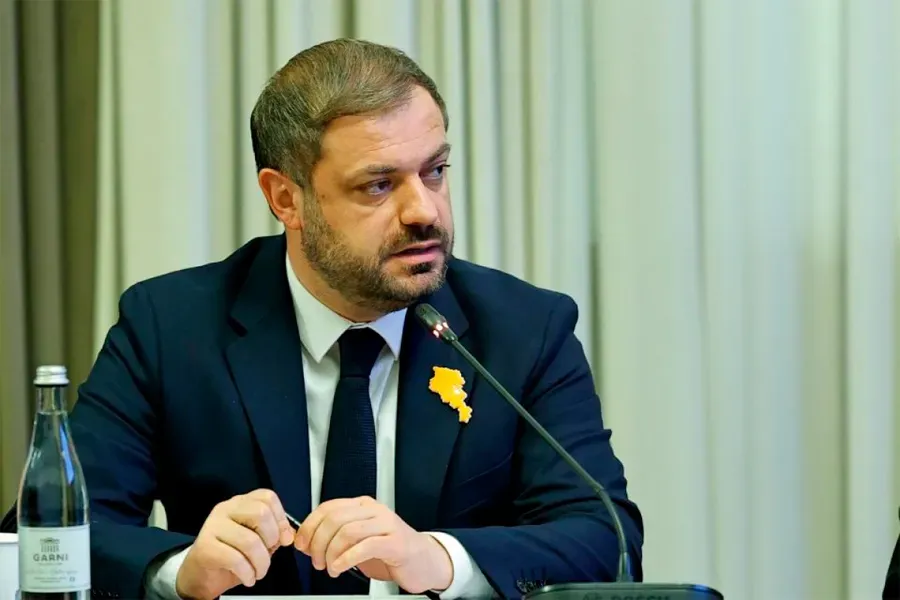
Speaking to TodayPress TV about the issue, political commentator Azad Masiyev said that political confrontations and military conflicts inevitably have a direct impact on the global economy.
According to him, the economy is closely linked to politics, just as politics is closely linked to the economy:
“These two philosophical categories must balance each other. If the balance between politics and the economy is disrupted in a society, serious upheavals may occur in that society. The same process also affects developments taking place around the world. In other words, if confrontations emerge in world politics today and military conflicts break out as a result of these political processes, it is natural that this will also directly affect economic processes.”
Speaking about what he described as the US strategy of controlling global energy resources, the expert recalled past and current geopolitical examples:
“It is worth recalling that the United States seeks to control the oil and energy resources of various countries in order to preserve and expand its political and geopolitical influence in the world. During the Arab Spring, changes of government also took place in Arab states, and claims were made that governments aligned with US interests were established in those countries, ultimately bringing their resources under control. In more recent developments, claims have also been made that the Venezuelan president was arrested under the pretext of combating drug trafficking, resulting in control over the country’s oil resources being taken over. In other words, the United States has the power to create an economic crisis in the world by pursuing its political objectives.”
Emphasizing his view that military scenarios surrounding Iran are in fact aimed at China, Azad Masiyev explained the economic objectives of the process as follows:
“Recent developments, including those taking place in Iran, are a clear example of this. There are views that the United States wants to invade Iran, change the government there and establish a government aligned with its interests. According to this approach, one of the main objectives is to use Iran against China. China’s growing economic power is a serious source of competition for the United States. In order to weaken China economically, the aim is to block energy resources, particularly oil, flowing to China and strengthen control over these resources. The sale of Venezuelan oil to China, including in yuan, is presented as another important aspect of this issue. Given that a large share of Iran’s oil exports is directed to China, it is also claimed that one of the objectives of US policy toward Iran is to prevent Iranian oil from being sold to China.”
The political commentator warned that any chaos that may emerge could paralyze the global market:
“There is also a view that the United States seeks to strengthen control over the Strait of Hormuz. A significant share of global oil trade passes through the Strait of Hormuz. If the United States were to take control of the Strait of Hormuz, it would indirectly gain the ability to exert significant influence over global energy markets. In such a case, it could potentially impose restrictions on tankers belonging to states that do not agree with US policy from passing through the area. Naturally, military operations in Iran and, in general, any military conflict between states capable of influencing the global oil market could cause sharp fluctuations in prices on global exchanges.”
The political analyst also highlighted tensions within the United States itself and in financial markets:
“When military operations are conducted around the Strait of Hormuz, the fact that a significant portion of global energy supplies passes through this region increases the risk of a crisis in the energy market. This crisis could affect European states and even the United States itself. Rising gasoline prices in the US could also trigger a reaction from the public and political circles. Statements by heads of state, particularly leaders of major economic and political powers such as the United States, also affect stock exchanges; at times, statements by Trump cause significant fluctuations in global markets. Companies engaged in financial manipulation also seek to take advantage of the resulting chaos. There is currently significant pressure on the Trump administration in the United States over the alleged failure of its military operations in Iran.”
Azad Masiyev concluded his remarks by addressing what he considers the main factor behind the weakening of international law and the sharp rise in oil prices:
“Unfortunately, it is difficult to say that world politics today is fully regulated within the framework of international law. In many cases, the factor of power plays an important role in international relations. In this regard, the United States also seeks to pursue its policies by using its political and economic power, and this can result in instability and economic problems in various regions. The rise in oil prices on the global market is also a result of this policy pursued by the United States,” he noted.
For reference, the price of a barrel of Azerbaijani Azeri Light crude rose by $3.69 to $121.43.
Turkan Isgandarli
PHOTOS