
Armenia to vacate Azerbaijan’s village – Panic in Yerevan
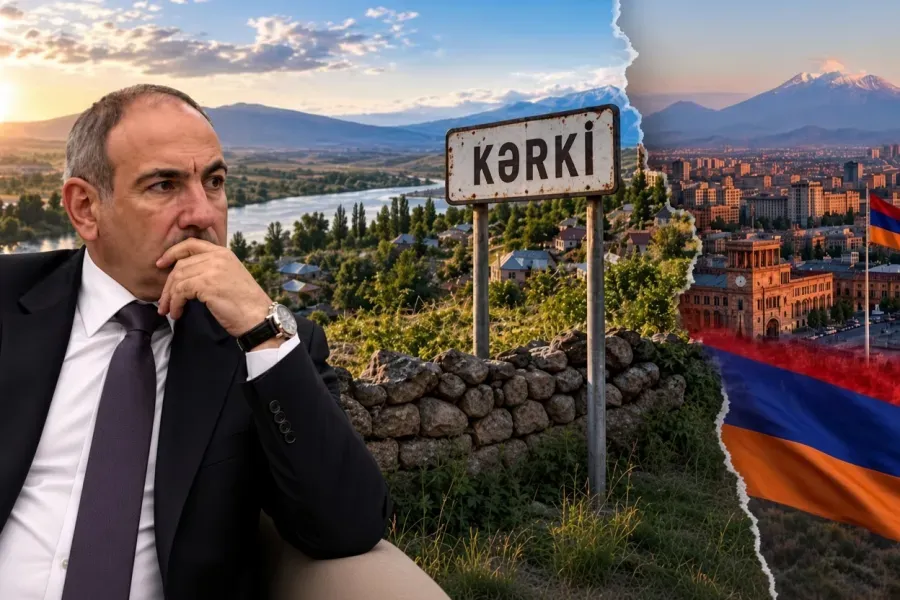
The possibility of returning Azerbaijan’s historic village of Karki to Azerbaijan has once again become a subject of discussion in Armenia.
TodayPress TV reports that an article published by Golos Armenii claims that Armenian Prime Minister Nikol Pashinyan is preparing to return Karki, referred to as “Tigranashen” by the Armenian side, to Azerbaijan.
The article states that, if the authorities take such a step, they will seek to carry out the process as quietly and discreetly as possible. The territorial issue is expected to be presented within the framework of the delimitation of the Armenia-Azerbaijan border, rather than as a separate political decision, and portrayed as part of the border demarcation process.
The main concern, however, is reportedly not the territory itself, but the political reaction it could trigger within Armenia. According to the claims, the Pashinyan government may seek to persuade the village residents in advance regarding a possible relocation and offer them compensation.
These claims are also linked to Pashinyan’s remarks in recent days concerning Karki and Azerbaijan’s former enclaves. The Armenian prime minister has described Karki and Azerbaijan’s former enclaves as settlements that are not part of Armenia’s internationally recognized territory of 29,743 square kilometers.
This is also why the issue is considered sensitive in Yerevan. Karki is not an ordinary border village. Located in the Nakhchivan direction of Azerbaijan, the area is of particular geographic and strategic importance. Pashinyan, meanwhile, approaches the issue primarily from a legal perspective and emphasizes the principle of internationally recognized territory during the delimitation of the border.
The article also draws attention to claims concerning the future of the village’s residents. According to the author, the government may seek to facilitate a possible relocation by offering residents financial compensation and housing opportunities. It is even claimed that some residents who have allegedly settled in Karki illegally could be persuaded to leave the area in exchange for better living conditions and financial support.
The publication of materials in the Armenian media indicating that village residents are concerned about the future of their homes also demonstrates the sensitivity of the issue for society.
The Karki issue also has a significant political dimension for Pashinyan. The prime minister has long linked Armenia’s future security to normalization of relations with Azerbaijan, the delimitation of borders and the signing of a peace agreement. Within this approach, compromises on certain territorial issues also appear inevitable.
For this reason, the fate of Karki could become one of the most controversial issues of Pashinyan’s “peace agenda” within Armenia.
According to Armenian experts, if the Karki issue is resolved through an agreement with Baku, Pashinyan may seek to justify it as a compromise required by the peace process. However, if the process is accompanied by confrontation, it could deal a serious blow to the policy he has advocated so far.
The issue does not end there. The return of Karki to Azerbaijan could be presented within Armenia as another territorial concession and increase opposition pressure on Pashinyan. Conversely, halting the process could create additional problems in implementing agreements reached with Azerbaijan and in negotiations on border delimitation.
Nevertheless, it cannot currently be said that a concrete agreement has been reached on the return of Karki. Pashinyan has also stated that there is no practical agreement on the issue.
However, it appears that the Karki issue remains on the agenda of the delimitation of the Armenia-Azerbaijan border.
Jala Rovshan