
“Oh, Kikos, my boy…” — Yerevan these days
Tense parliamentary politics, complex diplomacy and endless border discussions…
From a prayer at the White House to the prime minister’s Russian language course and a painting that “returned home” after 130 years — we have brought together the most interesting details that caught the attention of the Armenian media, despite appearing, at first glance, to have nothing to do with one another.
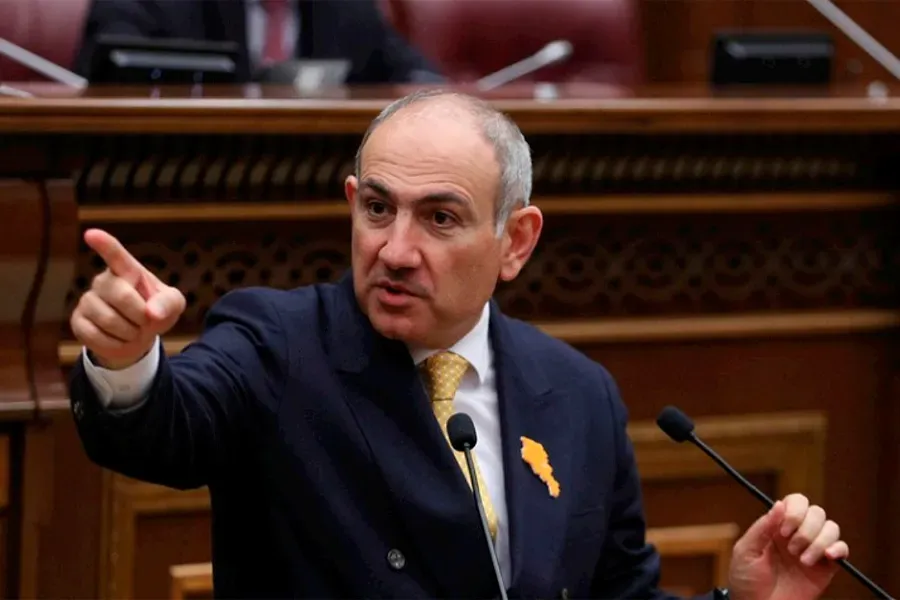
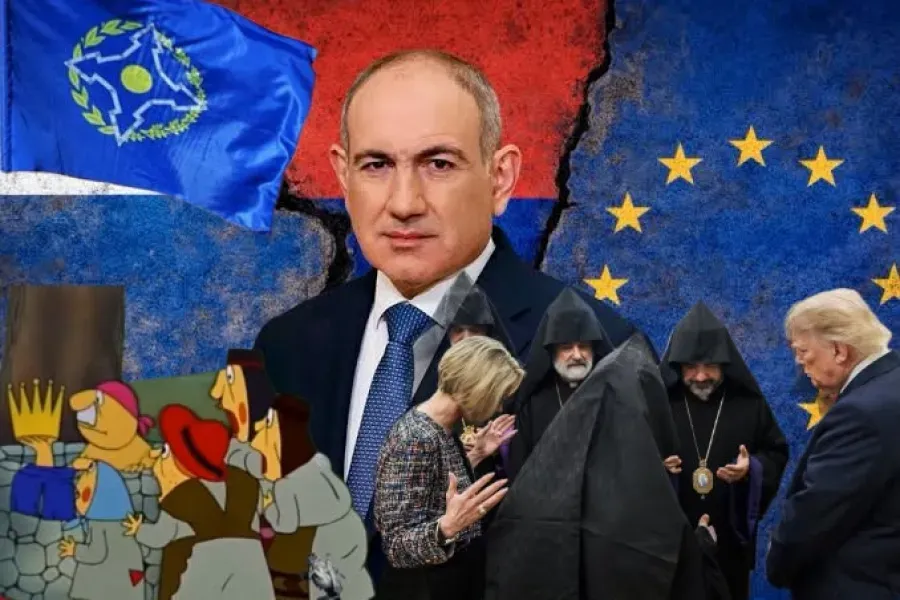
While discussing Armenia’s possible expulsion from the Collective Security Treaty Organization (CSTO) and the future of Russian military bases, Nikol Pashinyan unexpectedly referred to Hovhannes Tumanyan’s famous tale “The Death of Kikos.” In the story, a family mourns an unborn child, imagining that he will fall from a tree and die. Pashinyan compared the anxiety of the opposition and certain circles to the tale:
“If they expel us from the CSTO, we’ll climb a tree, fall from a cliff — oh, Kikos, my boy…”
The prime minister’s final message on the issue was blunt: “If they want to expel us, let them.”
Another point was Pashinyan’s message that preventing tensions apparently does not necessarily require military preparations or complicated diplomatic negotiations — even choosing a name can be enough. Pashinyan said that by referring to a certain area as “Karki” (editor’s note: an Azerbaijani exclave territory; Armenians call it Tigranashen), he had “neutralized one of the potential triggers of escalation.” Thus, a name on a map suddenly became a strategic political tool.
A “self-care” package for officials
Against the backdrop of crisis and tensions, the Armenian government has decided to approximately double the salaries of senior officials and MPs. Existing bonuses, of course, remain untouched. Although official institutions have sought to play down the issue, the public reaction has reportedly been: “They are taking care of themselves.”
A step back after 130 years
A different kind of symbolism emerged on the cultural front. The famous painting “Abandoned” (“Poqibshaya”) by artist Vardges Surenyants was brought to Armenia for the first time in 130 years. The masterpiece’s “return home” after such a long absence has been viewed not merely as a cultural event, but as carrying deeper symbolic meaning.
Spiritual diplomacy in the Oval Office
A meeting between Armenian religious leaders from the United States and President Trump in the Oval Office was remembered as more than an ordinary political audience, taking on the character of a mystical-diplomatic scene. Footage of the participants praying together became one of the most widely shared images of the week.
Pashinyan back at the school desk
Armenian Prime Minister Nikol Pashinyan announced that he had begun taking Russian language classes at the Public Administration Academy. His recommendation that other officials learn foreign languages, along with his warning that “English alone is not enough,” sounded both practical and quite ironic against the backdrop of Yerevan’s recent geopolitical manoeuvres.
The delicate timing of cyberattacks
It was announced that cyberattacks targeting election systems had intensified precisely one month before the process. Although the systems were reportedly not brought down, the fact that the attacks began at exactly this time — on the eve of the election — points to the “delicate calculations” behind the incident.
Tensions in Armenia continue to turn. To fully understand the country’s psychological and political landscape, this time we looked not at the major headlines, but at the “small” details left on the sidelines — details that say a great deal.
Jala Rovshan