
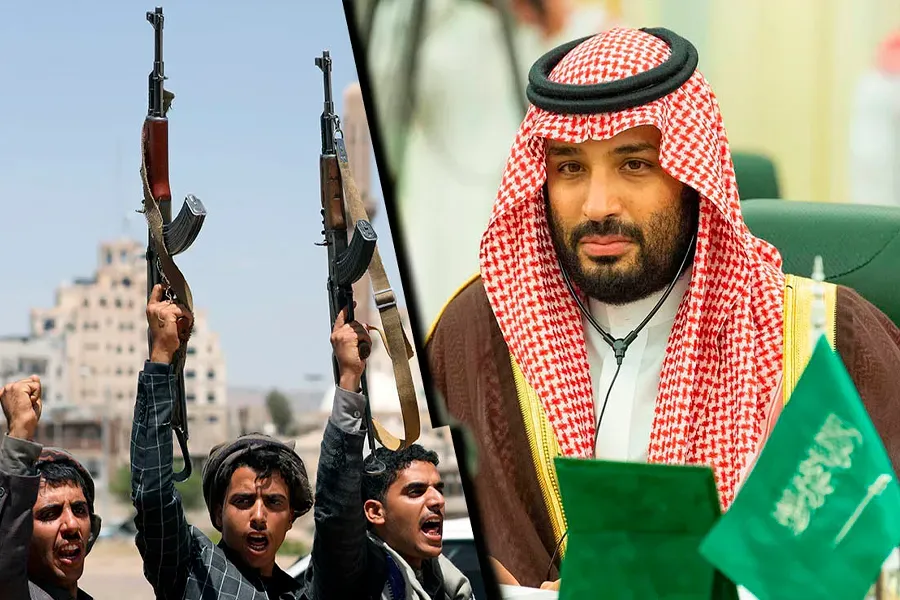
Why is Saudi Arabia, the Middle East’s second-largest power, in this situation?
Saudi Arabia is developing multilayered air defence capabilities against various threats. The country’s arsenal includes systems such as THAAD, Patriot PAC-2/PAC-3, I-HAWK, Shahine, Crotale, VL-MICA, Avenger, Stinger and Mistral.
TodayPress TV reports that various open sources indicate that Saudi Arabia has a sizeable number of air defence systems.
These systems are designed to counter various aerial threats, including ballistic missiles, cruise missiles, aircraft and unmanned aerial vehicles.
In 2017, the United States approved a possible sale to Saudi Arabia worth approximately $15 billion, including 44 THAAD launchers, 360 THAAD interceptor missiles and seven AN/TPY-2 radars.
In addition, in January 2026, the United States approved the possible sale of 730 Patriot PAC-3 MSE missiles to Saudi Arabia. The total value of the deal was estimated at up to $9 billion. According to the US Defense Security Cooperation Agency, the sale is intended to strengthen Saudi Arabia’s integrated air and missile defence capabilities.
Saudi Arabia has also acquired South Korea’s Cheongung-II medium-range air defence systems. In 2024, South Korean company LIG Nex1 signed a $3.2 billion contract with Saudi Arabia to supply 10 Cheongung-II batteries.
Thus, the country’s air defence structure is based on a combination of systems designed to operate at different ranges and counter different types of threats.
Giymat Mahir