
“Neither Washington nor Beijing can resolve this” – The world has been left without a leader…
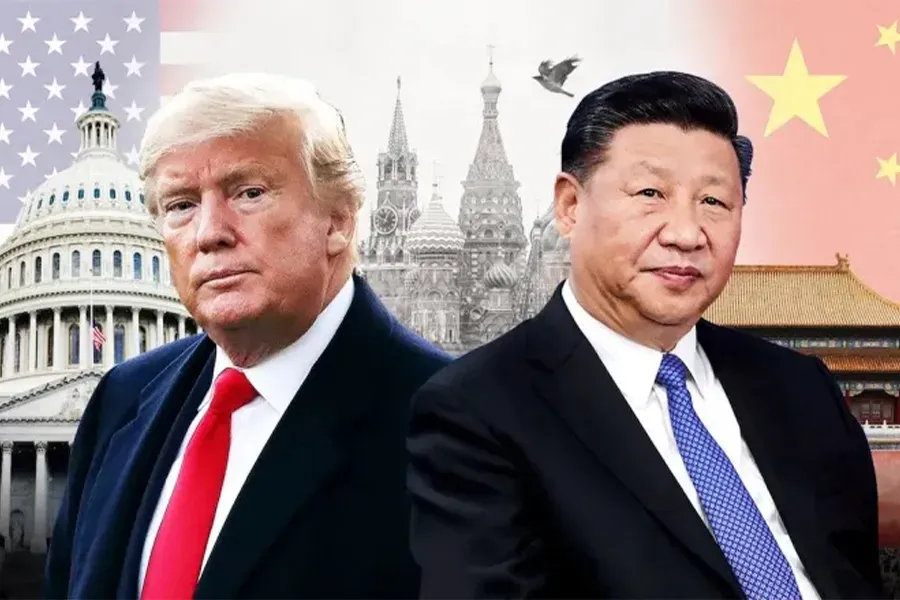
There are events that appear on the surface to be ordinary diplomatic procedures but in reality become a kind of X-ray image of an era. The state visit of Chinese President Xi Jinping to the United States and his talks with President Donald Trump are precisely such a case.
From September 23 to 25, 2026, the Chinese leader was in the United States, where he met with Trump in a visit accompanied by full state honors, a military ceremony, and a state dinner. The agenda included trade, technology, artificial intelligence, Taiwan, Iran, and other issues over which Washington and Beijing have serious disagreements. At the same time, both sides emphasized the need for dialogue and the preservation of stable relations.
At first glance, this may appear to be ordinary diplomacy between two great powers. But if we look deeper, a much more serious picture emerges.
Washington brought together not simply the President of the United States and the President of China. It brought together two of the largest centers of contemporary global power — at a moment when neither is any longer capable of determining the rules of the game for the entire world on its own. In my view, this is precisely the central significance of the current meeting.
The world has entered an era that can be described very simply: a world without a master.
This does not mean that the world is no longer home to superpowers, great powers, or states possessing enormous economic, military, technological, and political resources. On the contrary, the number of such centers of power is increasing.
But today there is no longer a single state or pair of states capable, as happened during various periods of the 20th century, of establishing global rules and then ensuring their observance in virtually all key regions of the planet.
This is precisely why the current international situation appears so contradictory, tense, and chaotic.
To understand how we arrived at this point, we need to look back.
After the Second World War, the world was divided between two superpowers — the United States and the Soviet Union. This was far from an ideal world. Indeed, it was a world of the Cold War, ideological confrontation, local wars, crises, and the constant threat of nuclear catastrophe. Yet this world possessed one crucial quality: predictability in the behavior of the principal centers of power.
Washington and Moscow understood the limits of what was possible. They knew that a direct confrontation between two nuclear superpowers could lead to catastrophe for all humanity. The bipolar world was not a world without wars, but it was a world in which a strict mechanism of global deterrence existed.
The United States and the Soviet Union competed in virtually every sphere — ideology, economics, armaments, space, and influence over developing countries — but at the same time they were compelled to observe certain rules of the game.
In 1962, humanity came literally within a few steps of nuclear catastrophe during the Cuban Missile Crisis. It was then that it became particularly clear that practically irreconcilable confrontation could exist between great powers, but that there was also a limit beyond which neither side could afford to go.
After 1945, an entire system of international institutions was established to manage the new world. The United Nations, the Security Council, international financial institutions, and other structures were created on the basis of the realities of the mid-20th century.
This system was imperfect, but it reflected the distribution of power at the time.
Then came 1991. The Soviet Union disappeared, and with it disappeared one of the two principal pillars of that system.
And this is where things become particularly interesting: the old world ended, but a new one was never created.
Yes, for a period of time, the United States became the world’s sole superpower. It was a moment of American triumph, which many perceived as the definitive victory of a particular political, economic, and ideological model.
In the intellectual atmosphere of that period, Francis Fukuyama’s concept of the “end of history” gained enormous prominence, associated with the assumption that the global ideological struggle had come to an end. Zbigniew Brzezinski, in The Grand Chessboard, viewed American predominance as a central factor in global geopolitics.
Today, it is already clear that history took a much more complicated course.
The problem was not that the United States became the world’s most powerful state after the collapse of the Soviet Union, because that was an objective fact.
The problem emerged when the historical moment of American predominance began to be perceived as a permanent structure of the international system.
But history does not favor permanent structures. It constantly changes the balance of power, and over the past 35 years the world has changed beyond recognition.
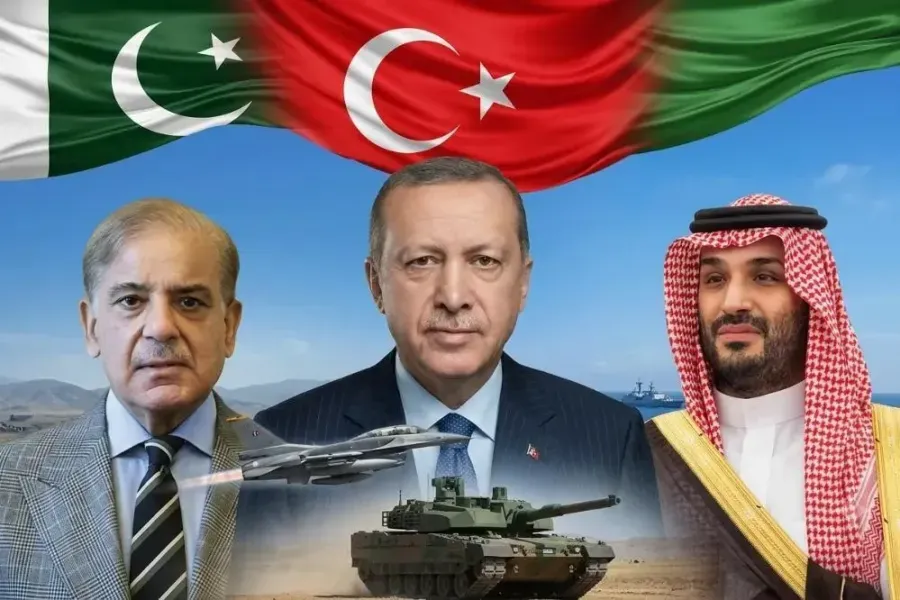
China has become one of the world’s largest economic and technological powers. India has emerged as an independent center of economic and political influence. The European Union has become a major economic and normative center. Russia has preserved and restored a significant part of its military and political potential. Turkey has strengthened its regional autonomy. The states of the Persian Gulf have acquired an entirely different economic and diplomatic weight.
And this is far from a complete list.
As a result, something occurred that many political concepts of the early 1990s could not have anticipated.
The world ceased to be unipolar, but it has not yet become stably multipolar, and it is precisely between these two conditions that we find ourselves today.
This is a fundamentally important circumstance.
We are not living in an already established new world order, but in a period of its formation. Transitional eras are always the most dangerous because old rules are already ceasing to function, while new ones have not yet become universally accepted.
This is why the contemporary world resembles a vast ship on which the old captain no longer knows all the new currents, while no new captain has yet been chosen.
Against this backdrop, relations between the United States and China are particularly important.
Washington and Beijing are competitors in virtually every strategic sphere. They compete in trade, technology, artificial intelligence, manufacturing, investment, and influence in different regions of the world. There are serious disagreements over Taiwan, security issues, and China’s role in other international crises.
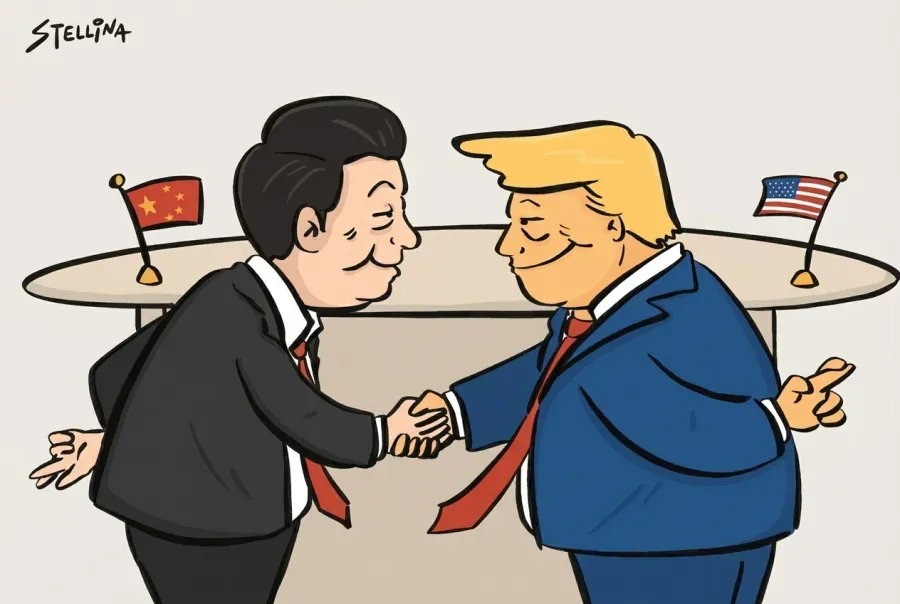
At the same time, however, they cannot afford to turn this rivalry into direct confrontation, which is why they continue to meet and why negotiations resume after periods of sharply deteriorating relations.
This is precisely why, even amid serious mistrust, Washington and Beijing speak of the need to maintain stability.
Xi Jinping’s current visit demonstrated this particularly clearly. The American side organized an exceptionally high-profile state reception for the Chinese leader, while the talks themselves took place against the backdrop of serious disagreements. At the same time, following the meeting, both sides described the talks as constructive and emphasized the need for further engagement.
At first glance, this may appear contradictory. In reality, however, there is no contradiction here, because the more dangerous the rivalry, the greater the need for dialogue.
During the Cold War, mechanisms existed that allowed Moscow and Washington, at critical moments, to prevent the situation from escalating into direct confrontation. Today, Washington and Beijing have to create their own mechanisms for managing competition — and they must do so under conditions of an entirely different degree of interdependence.
It is particularly revealing that artificial intelligence is playing an increasingly important role in the current relationship. This is no longer simply a matter of economic competition, but an issue of national security and future technological superiority. Even discussions about specific mechanisms for preventing crises related to AI demonstrate how profoundly the very instruments of global competition have changed.
This creates a paradoxical situation.
The United States and China are the principal competitors in the struggle over the technological and economic future, yet at the same time they are compelled to cooperate to prevent their competition from spiraling out of control.
Yet there is an even more important problem.
Even if the United States and China reach an agreement with each other, they can no longer govern the entire world between them. This is a circumstance that is often underestimated today.
Let us imagine that Washington and Beijing reach agreements on trade, technology, or even individual international crises. An enormous number of states and regional centers of power would still remain, each with its own interests, resources, and understanding of the future.
This is precisely why today’s world cannot be explained solely through U.S.-China relations. This is no longer the old bipolarity, but a far more complex system.
If, in the 20th century, a significant part of international politics revolved around the question, “Whose side are you on — Washington’s or Moscow’s?”, today that question increasingly loses its meaning.
A state may cooperate with the United States in one sphere, with China in another, with Turkey in a third, and with the states of the Persian Gulf in a fourth.
A new geometry of international relations is emerging, and it does not resemble a neat structure with several clearly defined blocs. Rather, it is a constantly changing network of overlapping interests.
This is why many of the familiar political categories of the past are gradually losing their explanatory power.
But if the world is moving toward multipolarity, does that mean it will automatically become more stable?
Not at all. And this is where another major illusion lies.
Multipolarity in itself is not synonymous with peace. Yes, it may lead to a more equitable distribution of influence, but it may also increase the number of conflicts among centers of power if new rules of interaction are not established.
The problem is that the old institutions of international security continue, to a considerable extent, to reflect the realities of 1945.
The United Nations was established after the Second World War, and its Security Council reflects the balance of power among the victors of that war. Yet the world in which humanity lives in 2026 is completely different from the world of 1945.
It is telling that the United Nations itself is now attempting to reform the functioning of its system, acknowledging the need to adapt the organization to new conditions and the growing complexity of contemporary challenges.
But the problem goes far deeper than administrative reforms. The world has changed, while the fundamental architecture of global governance has changed much less, and this is one of the reasons behind the current crisis.
We are attempting to address 21st-century problems through institutions, a significant part of which were created for the 20th-century world, and the result is visible to us every day.
Russia’s war against Ukraine continues, the Middle East remains a zone of profound instability, the United States and China continue their strategic rivalry, and Taiwan remains one of the most dangerous potential flashpoints of global confrontation.
The struggle is not only over territory.
It is also a struggle over technology, artificial intelligence, energy resources, transportation corridors, critical minerals, markets, logistics, and influence. In other words, the very nature of the struggle for global influence is changing.
In the 19th century, great powers divided colonies; in the 20th century, they competed over ideological blocs and military-political spheres of influence; in the 21st century, the struggle is simultaneously territorial, economic, technological, informational, and civilizational. This is precisely why the current transition toward a new world order may prove much longer than many assume.
We cannot expect that one day the leaders of several major states will sit down at a table, sign a new document, and that the world will become stable the following day.
That is not how it works.
Too many independent actors have emerged who no longer want to be objects of other people’s policies, and this, incidentally, is one of the defining characteristics of the new era.
Medium-sized and even small states have gained far greater opportunities to pursue independent policies than they had in the past.
But with these opportunities have come greater risks.
In a bipolar world, the room for maneuver was limited because states had to take two superpowers into account.
In a multipolar world, there are more opportunities, but there is also less room for error, because whereas a small state could, under certain circumstances, rely on the support of one of the two global centers, today it is increasingly dangerous to rely exclusively on any single power.
Neither the United States nor China, neither Europe nor Russia, can solve all the world’s problems. Nor can any other individual power assume such a role. Therefore, states must learn to live in a world where no one will be able to provide for their security on a permanent basis in their place.
This is particularly important for states located in regions where the interests of major powers intersect, because for them the new era is simultaneously a challenge and an opportunity.
A challenge because the cost of strategic mistakes is increasing, and an opportunity because the emergence of multiple centers of power expands the space for maneuver.
But only those states that understand their own national interests and are capable of pursuing an independent policy will be able to take advantage of this space. This is precisely why it is so important today to speak about the agency of states.
Not about which camp they should automatically join, but about whether they are capable of determining for themselves what they want from this new world.
Because the old formula, “Who is our master?” must gradually give way to another: “Who are we, and what do we want?”
That is the central question of the new era.
The world will become increasingly multipolar, but this process is not complete. Indeed, it is only beginning.
New centers of power, new alliances, new economic and transportation links, and new security systems are now taking shape. States are closely observing how the balance of power is changing and are attempting to prepare in advance for the future.
This is precisely why it would be mistaken to think that today’s global disorder is merely a temporary phase after which everything will return to the familiar norm. The previous norm no longer exists.
We have entered a historical period in which the old order is definitively losing its ability to be universal, while the new one is only beginning to take shape. We should therefore be prepared for the possibility that the current instability will continue for a very long time.
We may face new local wars, new regional crises, and new clashes of interests. Not because humanity has suddenly become worse than it was before, but because a large-scale redistribution of power is taking place.
And every redistribution of influence in history has been accompanied by conflict.
The greatest danger facing today’s world lies not in the fact that the old order has ended, but in the fact that the new one has not yet been born.
This is precisely why the meeting between Xi Jinping and Donald Trump in Washington has significance far beyond U.S.-China relations.
The two leaders are not trying to agree on who will be the sole master of the planet. Rather, they are trying to prevent the rivalry between two giants from ultimately destroying an already fragile system of international relations.
But even if they succeed, the world will still have to learn to live in an entirely new reality — one in which there is no longer a single center of power; where agreements between only two great powers are no longer sufficient; where an increasing number of states will seek to become subjects rather than objects of international politics; where the old rules are gradually disappearing while new ones are only being created. Therefore, the most reasonable course today is not to wait for the old world to return.
It will not.
We must learn to live in the new world and prepare for it now.
The Italian philosopher Antonio Gramsci once wrote: “The old world is dying, and the new world struggles to be born; in this chiaroscuro, monsters arise.”
Perhaps today this thought sounds particularly contemporary, because the central task of our time is to ensure that, in the interval between the old and the new world order, what emerges is not a new chaos, but a new balance.
Ramiz Yunus
Professor of Political Science
Khazar International University