
“A world on autopilot” — Ramis Yunus writes...

Imagine a large passenger aircraft flying at an altitude of several thousand metres suddenly entering the epicentre of an extremely powerful thunderstorm. Beyond the windows, there is nothing but darkness. Lightning tears across the sky, while powerful air currents toss the multi-tonne aircraft from side to side. The plane plunges sharply before suddenly lurching upwards again. Anxiety spreads throughout the cabin. Passengers grip their armrests; some try to contact their loved ones, while others simply stare silently out of the window, realising that what is happening is beyond their control.
The captain tries to reassure the passengers, but his voice sounds increasingly unconvincing. The situation is further complicated by the fact that the aircraft is becoming increasingly difficult to control, while the crew themselves seem uncertain about the severity of the danger and the manoeuvre they should undertake. The passengers are no longer concerned about the comfort of the flight. Instead, a much simpler and more frightening question begins to occupy their minds: will they even make it safely to the ground?
Is there an alternative airport nearby? Will there be enough fuel? Could the control systems fail at the most critical moment? And, above all, who is actually in control of the flight today?
Perhaps it would be difficult to find a more accurate metaphor for the state of the modern world. We are all aboard one aircraft called Planet Earth, and today it is experiencing one of the most severe periods of geopolitical turbulence in recent decades. The problem lies not merely in the number of conflicts unfolding simultaneously, but also in the fact that the old system for managing international affairs is rapidly losing its effectiveness, while a new one has yet to emerge.
The world seems to have found itself on autopilot, with the aircraft continuing along a previously programmed route even though the conditions around it have long since changed. Increasingly, there are doubts as to whether that route bears any resemblance to the new reality.
Today, this metaphor requires little explanation. A glance at the world map is enough to understand just how dangerous the course along which humanity is travelling has become.
The war launched by Russia against Ukraine has long ceased to be merely a Russian-Ukrainian conflict. It has become one of the central factors reshaping the entire European security architecture. The European Union and NATO member states are providing Ukraine with extensive financial, military-technical and political support, supplying weapons, ammunition, air defence systems and intelligence. At the same time, Western countries are seeking to prevent a direct military confrontation with Russia, recognising that such an escalation could have unpredictable consequences.
The United States itself has demonstrated in recent years just how significantly the foreign policy of even a single superpower can change with a change of political administration. While under Joe Biden, Washington placed its primary emphasis on providing large-scale support to Ukraine, Donald Trump's return to the White House ushered in an entirely different set of priorities, bringing questions of ending the war, negotiations, the distribution of financial burdens and relations with Moscow into a different light.
This development is of fundamental importance. Countries that built their security strategies primarily around American guarantees have been compelled to reconsider their previous assumptions about their reliability. And this is not simply a matter of a particular president or his political preferences. It reflects a deeper shift in America's approach to international commitments and the distribution of responsibilities among its allies.
An equally dangerous situation is unfolding in the Middle East. The military confrontation surrounding Iran, into which the United States and Israel have become directly involved, has demonstrated how quickly a regional crisis can assume global proportions. Even temporary ceasefire arrangements fail to guarantee a lasting settlement, while the resumption of hostilities once again threatens maritime routes, energy supplies and the economic interests of dozens of countries. The Strait of Hormuz, through which a significant share of the world's oil supplies passes, is not merely a geographical point on the map; it is a potential instrument of global pressure.
It is particularly important to understand that the Gulf states, which have spent decades building their security systems around the American military presence, are now being forced to account for entirely new risks. The presence of American military bases does not, in itself, guarantee that a country's territory will be protected against missile and drone attacks, or that its energy infrastructure will be safe from potential strikes.
In other words, the former security model, under which Washington served as the region's principal external guarantor of stability, is now undergoing a serious test of its resilience.
Adding to this is the strategic rivalry between the United States and China. It would be a mistake, however, to reduce this confrontation solely to trade tariffs or technological competition. Much more is at stake: control over critical technologies, artificial intelligence, the semiconductor industry, maritime routes, financial flows and, ultimately, the rules governing the future world order.
Even when Washington and Beijing signal their readiness to negotiate and temporarily ease tensions, their strategic rivalry does not disappear. On the contrary, it is becoming increasingly systemic. China is expanding its economic, technological and military influence, while the United States is seeking to preserve its position as the world's leading power. At the same time, neither side has an interest in a direct military confrontation, the consequences of which could prove catastrophic for the global economy.
Yet this is precisely where another problem emerges: countries that have no desire to become participants in someone else's geopolitical struggle are inevitably being drawn into its orbit. Japan, South Korea, the countries of Southeast Asia, as well as states in Central Asia and the Middle East, are compelled to take American interests, China's economic influence and their own national priorities into account simultaneously.
Consequently, even countries geographically distant from the main centres of conflict can no longer remain on the sidelines.
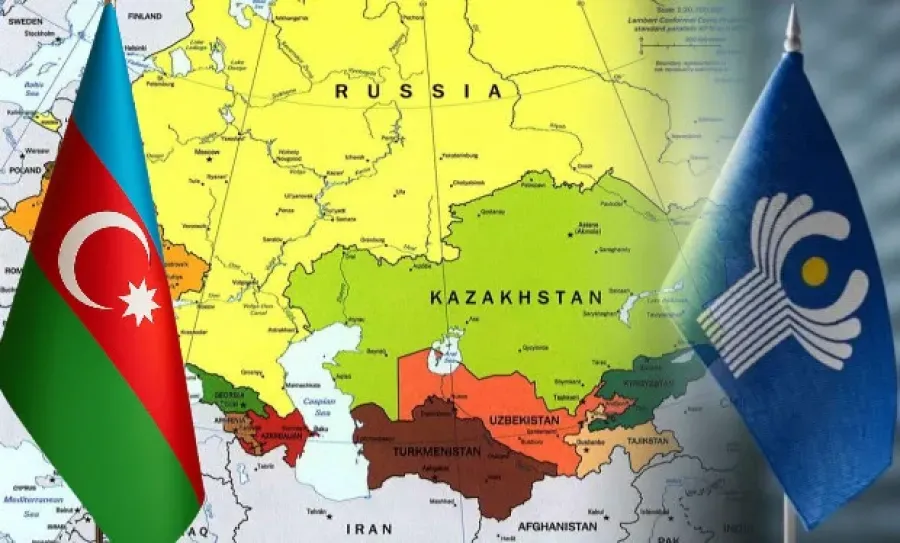
Eurasia occupies a particularly important place in this entire picture. It is here that the world's largest centres of military, economic, energy and demographic power are concentrated. It is also where the interests of leading global powers intersect and where some of the most important transport and trade corridors run.
It is no coincidence that, in the early twentieth century, British geographer and political thinker Halford Mackinder formulated his famous geopolitical theory, according to which control over the Heartland — the central part of Eurasia — opened the way to global dominance. His well-known formula concerning Eastern Europe, the Heartland and the World-Island became one of the foundations of classical geopolitics.
Of course, the modern world is considerably more complex than the geographical models developed a century ago. Control over territory no longer automatically translates into control over the global economy, technology or international institutions. Nevertheless, Eurasia's strategic importance has not diminished. On the contrary, today it is manifested simultaneously across several dimensions: military, energy, technological and transport.
This is precisely why developments across Eurasia have implications extending far beyond individual regions.
The Russia-Ukraine war is reshaping the architecture of European security. The confrontation surrounding Iran affects the stability of the Middle East and global energy markets. The rivalry between the United States and China is shaping the future of the Indo-Pacific region. Meanwhile, developments in the South Caucasus and Central Asia are gaining additional significance in the context of emerging transport corridors, energy security and the redistribution of international influence.
It is here that the crisis of the old international relations system becomes particularly evident.
Following the end of the Cold War, many countries grew accustomed to believing that the security system established under American leadership would remain in place almost indefinitely. Europe largely delegated the resolution of key military security issues to Washington, while the Gulf states regarded the American presence as a crucial guarantee of protection against external threats.
Today, however, it is becoming increasingly clear that no superpower can shoulder responsibility for the security of all its allies indefinitely, particularly when crises emerge simultaneously across several strategic fronts.
This does not mean that American power has disappeared or that NATO has lost its significance. On the contrary, the United States continues to possess enormous military and economic capabilities, while NATO remains a vital military and political alliance. What has changed, however, are the conditions under which this system operates. Washington is increasingly insisting that its allies assume greater responsibility for their own defence, while European countries are being compelled to accelerate the development of their own defence capabilities.
This process is already under way in Europe, although it will be lengthy and challenging. Increased military spending, the development of domestic defence industries, debates over strategic autonomy and the need for greater independence in security matters all point to a gradual recognition of the new reality.
However, there is an enormous gap between recognising the need for change and actually possessing the capacity to ensure one's own security. European countries remain dependent on American military technologies, intelligence capabilities, missile defence systems and strategic logistics. Consequently, what is taking place is not an immediate rupture in transatlantic relations, but rather a gradual redistribution of responsibilities and capabilities within the Western community.
Unfortunately, this process will also be accompanied by serious political and economic contradictions.
Against this backdrop, a question arises which, in my view, should now become the foremost concern of every state, regardless of its territory, economic potential or geographical location: to what extent is it capable of determining its own destiny?
We are accustomed to viewing international politics through the prism of alliances, partnerships, strategic agreements and security guarantees. Yet one fundamental principle is sometimes lost behind all these concepts: an alliance can be effective only when its members possess their own political will and are capable of defending their national interests.
Here, it is essential to distinguish between two concepts: alliance and dependence.
An alliance implies mutual interests, the coordination of positions and the sharing of responsibilities. Dependence, by contrast, arises when a state effectively transfers to another the right to determine the fundamental parameters of its foreign and domestic policy in exchange for security guarantees and economic support.
Under conditions of a stable international order, such an arrangement may sometimes appear entirely comfortable. But when the international system begins to disintegrate, dependence becomes a serious vulnerability.
Consider a situation in which a country builds its entire strategy around the promises of a single external partner, only to face a shift in that partner's political course, domestic problems or entirely different geopolitical priorities. It is at that moment that the country discovers that its own strategic independence cannot be replaced by even the most emphatic declarations of alliance.
That is why the concept of state agency is becoming increasingly important today.
State agency is not about making grand declarations of independence or demonstratively setting oneself against other countries. Above all, it is the ability to formulate national interests independently, make strategic decisions, ensure one's own security, maintain economic resilience and influence the developments taking place around the country.
Nor does state agency mean abandoning alliances, international cooperation or integration. On the contrary, the stronger a state is internally, the greater its capacity to establish equal and mutually beneficial relations with external partners.
It is precisely in this context that the developments taking place in Azerbaijan are particularly illustrative.
Today, Azerbaijan offers a compelling example of how a state can steadily strengthen its international agency even while operating in a complex geopolitical environment.
Following its victory over Armenia in the Second Karabakh War in 2020 and the restoration of full sovereignty over its entire territory in 2023, Azerbaijan entered an entirely new phase of international positioning. From a country whose foreign policy had been shaped for decades largely by the need to resolve the Karabakh conflict, it has emerged as one of the key independent actors in the South Caucasus.
However, it would be wrong to attribute this transformation solely to military victory. The military dimension was a crucial factor, but it was underpinned by a broader state strategy: strengthening the economy, developing the energy sector, diversifying foreign economic relations, pursuing multi-vector diplomacy and consistently defending national interests. As a result, Azerbaijan is now rightly described as a middle power.
Today, Azerbaijan is able to engage in independent dialogue with Türkiye, Russia, the United States, the European Union, China and the countries of the Middle East simultaneously, without restricting itself to the interests of any single geopolitical centre. Its importance is growing not only because of its energy resources but also because of its geographical position at the crossroads of transport corridors connecting Europe and Asia.
Of particular importance is the fact that Azerbaijan is increasingly viewed not merely as an object of interest for major powers, but as an independent participant in shaping the regional agenda. The shift in the balance of power in the South Caucasus after 2023, together with the subsequent diplomatic developments, has provided further confirmation of this new position.
Naturally, this does not mean that the country is free from problems, contradictions or external constraints. Nevertheless, the ability of a state to determine its priorities independently and secure their implementation remains the principal criterion of state agency.
Here, I would like to draw attention to one fundamental point: the Azerbaijani experience is valuable not because it can be mechanically replicated by other countries, but because it demonstrates that strengthening national independence in a complex international environment is indeed possible through a consistent and determined approach.
For Ukraine, this issue has a very special significance.
The Ukrainian people have already paid an enormous price for the right to determine their own future. Russian aggression has demonstrated just how dangerous it is to find oneself in a situation where a state's very existence and sovereignty become targets of military pressure from a more powerful neighbour.
Western support for Ukraine is of immense importance, and it would be unfair to underestimate the contribution of the United States, European countries and other partners to Ukraine's ability to continue resisting Russian aggression. At the same time, however, it is essential to recognise that external support, however extensive, cannot replace a country's own national strategy.
Ukraine must not only seek reliable international security guarantees but also develop its own long-term defence system, strengthen its military-industrial complex, reinforce its economic independence, create conditions for the return of human capital and steadily expand the scope of its diplomatic initiative.
Indeed, some of the necessary foundations for this already exist. The war has served as a tragic yet powerful impetus for the development of Ukrainian defence technologies, unmanned systems, electronic warfare capabilities and new approaches to organising military production. Ukraine's defence industry has become an important component of Europe's future security architecture.
Ukraine should strive to be recognised not merely as a country in need of protection and support, but as a state with its own technological, economic, military and diplomatic capabilities, capable of making an independent contribution to European and international security.
Here, I would also like to emphasise that strengthening Ukraine's state agency is in no way incompatible with its European choice or its aspiration to integrate into Euro-Atlantic structures. On the contrary, a strong, economically resilient and militarily self-reliant Ukraine will be a far more valuable partner for Europe and the entire Western community.
Moreover, I am convinced that this very approach should become one of the principal guiding principles not only for Ukraine but also for all countries across the post-Soviet space.
The countries of Central Asia, the South Caucasus, Moldova and other states situated between the interests of major geopolitical centres must draw their own lessons from current developments. They need to develop their national economies, diversify external relations, strengthen their defence capabilities and avoid situations in which vital decisions are made beyond their national capitals.
This is not a call for isolationism, nor is it a proposal to abandon international alliances. It is a call for a more mature understanding of national interests and responsibility for one's own destiny.
Returning to our aircraft analogy, we must acknowledge that expecting the current turbulence to end soon and the international system to return to its former state would be overly optimistic.
We have entered a period of prolonged transformation of the world order. Old rules are gradually losing their effectiveness, new centres of power are gaining influence, and mechanisms of international cooperation are increasingly proving incapable of preventing crises in a timely manner.
What is particularly alarming is that the weakening of established international institutions, the intensification of regional rivalries and the growing importance of military force as an instrument of foreign policy are all taking place simultaneously. At the same time, none of the leading powers possesses all the resources necessary to manage emerging crises single-handedly.
Under such circumstances, the risk increases that local conflicts will escalate into regional ones, while regional confrontations may create the threat of direct clashes between major powers. And since all five permanent members of the UN Security Council are, in one way or another, involved in the global system of contradictions, the international community's ability to prevent escalation is often limited.
That is why today's world resembles not simply an aircraft caught in a thunderstorm. It is an aircraft facing a prolonged journey through constantly changing weather conditions, where the old navigational reference points can no longer guarantee a safe route.
Perhaps the crew will still manage to steer the aircraft out of the most severe turbulence. Perhaps it will have to look for an intermediate airport, change course, recalculate its trajectory and even abandon its original flight plan. But one thing is absolutely clear: passengers can no longer simply remain seated and hope that someone else will inevitably ensure their safety.
Ultimately, the same applies to states. In the twenty-first century, it is no longer enough simply to board the international aircraft and rely on the competence of its crew. A country must have its own navigation instruments, fuel reserves, a well-prepared crew and, above all, the ability to make independent decisions in a critical situation.
That is precisely why, for Ukraine, Azerbaijan and all other countries across Eurasia, strengthening their own state agency is no longer merely a matter of foreign policy ambitions. It has become a matter of national security, state sovereignty and historical destiny.
There is a simple rule in geopolitics: if you are not a subject of decisions, you inevitably become an object of them. The ancient Greek historian Thucydides expressed this idea with remarkable precision: "The strong do what they can, and the weak suffer what they must."
Ramis Yunus
Professor of Political Science
Khazar University