Government advises public to stockpile food and water
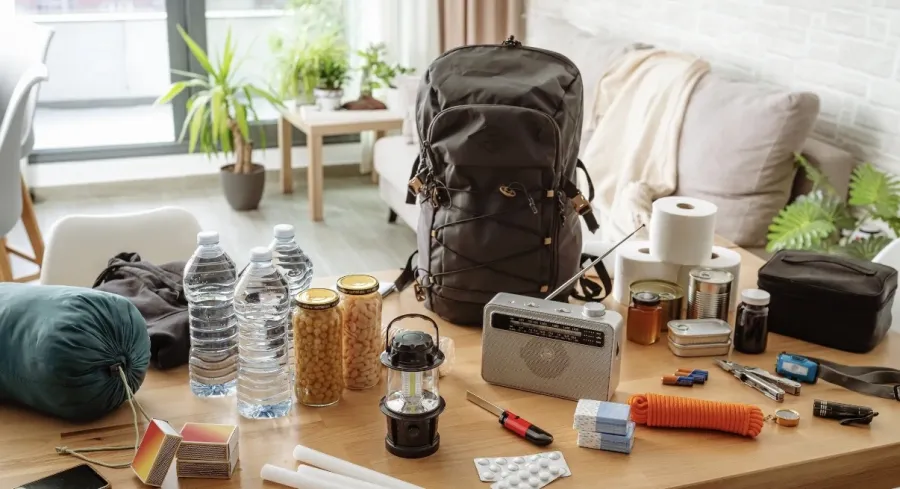
Every person in Britain is being advised to store up to nine litres of drinking water and three days’ worth of food to prepare for emergencies. The government’s new guidance is designed to ensure that households can meet their basic needs independently for at least 72 hours in the event of severe weather, cyberattacks or other serious emergencies.
TodayPress TV reports, citing The Guardian, that the campaign, titled “Be Ready”, is being launched amid growing official concerns about the impact of the climate crisis, technological dependence and threats posed by hostile states.
Security Minister Dan Jarvis said that anyone who is able to follow the recommendations should do so. According to him, these are simple steps aimed at preparing for everyday emergencies and strengthening the country’s overall resilience.
Defence Secretary Wes Streeting said that the UK must also prepare for the threat of “state-sponsored terrorism”, which could involve Russia and other hostile states targeting everyday infrastructure.
“Terms such as hybrid warfare and grey-zone threats do not adequately convey to the wider public the danger that I prefer to call state-sponsored terrorism”,- he said.
The minister added that these threats are not hypothetical but real, and are already being felt not only in other countries but also in Britain itself. He said the country therefore needed to take national defence and overall resilience more seriously.
According to Streeting, households and businesses should understand how prepared they are for emergencies and how they would respond to disruptions that could affect everyday life.
Under the government’s recommendations, people should keep blankets, cash, a first-aid kit, a torch with batteries and a hand-crank FM radio at home. The daily drinking water requirement is estimated at three litres per person. Additional water is also needed for cooking and washing.
In August, the government announced that people in Britain would be advised to stock up on canned food. However, the “Be Ready” campaign launched by the Cabinet Office sets out more specific requirements. The campaign is expected to be promoted through advertisements on social media and radio.
Building up a three-day emergency supply is considered a realistic and practical measure for households. With this initiative, Britain is adopting an approach similar to that of France, the Republic of Ireland and the Netherlands, which have also issued recommendations on how people should prepare for major disruptions and emergencies.
The campaign comes ahead of the winter storm season. In recent years, several powerful storms have caused significant disruption across the UK. In January, after Storm Goretti hit the country, tens of thousands of homes in the Midlands, south-west England and Wales were left without electricity. Wind speeds during the storm reached approximately 100 miles per hour.
There are also concerns about the possible effects of the “Super El Nino” phenomenon, which has raised the possibility that 2027 could become the hottest year on record. The phenomenon could cause unstable weather conditions and affect global food supplies and energy systems.
The announcement of the recommendations coincided with the temporary closure of 32 UK government websites as a security precaution. The move followed the discovery of a security vulnerability in PHP, a programming language used by millions of websites.
The UK’s National Cyber Security Centre sent 50,000 alerts to organisations that could be affected by the vulnerability. The incident once again highlighted the extent to which modern societies depend on the internet and other critical technologies.
In April 2025, Spain and Portugal also experienced a sudden power outage. A series of failures caused by instability in the electricity grid lasted several hours and affected approximately 55 million people. It was one of the largest power cuts recorded in Europe in recent years.
Streeting said people should also be prepared for attacks that Russia and other hostile states could carry out as part of hybrid warfare. These could include cyberattacks capable of disabling payment systems used by businesses or disrupting supply chains.
The minister made the remarks during a speech at a new tank-barrel manufacturing facility in Telford, in England’s West Midlands. The plant, owned by Germany’s Rheinmetall, is part of Britain’s efforts to accelerate its arms production in response to Russian military threats. However, Streeting also stressed the importance of preparing the public for hybrid warfare and acts of sabotage that fall short of open warfare.
The Royal Navy has monitored Russian intelligence vessels operating near the undersea pipelines and communication cables connecting Britain with continental Europe and other regions. This has heightened concerns that the infrastructure could be targeted in the future. However, such an attack would represent a significant escalation in Moscow’s position.
European countries have increasingly warned about the threat of sabotage, particularly incidents linked to Russia. Such operations could disrupt infrastructure and even pose a direct threat to human safety.
Incidents of this kind include the discovery in August of a drone equipped with explosives near a Ukrainian cargo aircraft at Leipzig Airport in Germany, as well as a series of explosions and fires at defence facilities.
Successive British governments, both Conservative and Labour, have rarely launched public awareness campaigns of this kind, fearing accusations of spreading public alarm. The last major campaign of this nature in the country was “Protect and Survive”, launched in 1980 to explain how people could survive a nuclear war. At the time, the public was advised to build shelters at home and store enough food to last 14 days.
Zehra Mammadova