How will Azerbaijan support Türkiye? – COP29 President speaks out
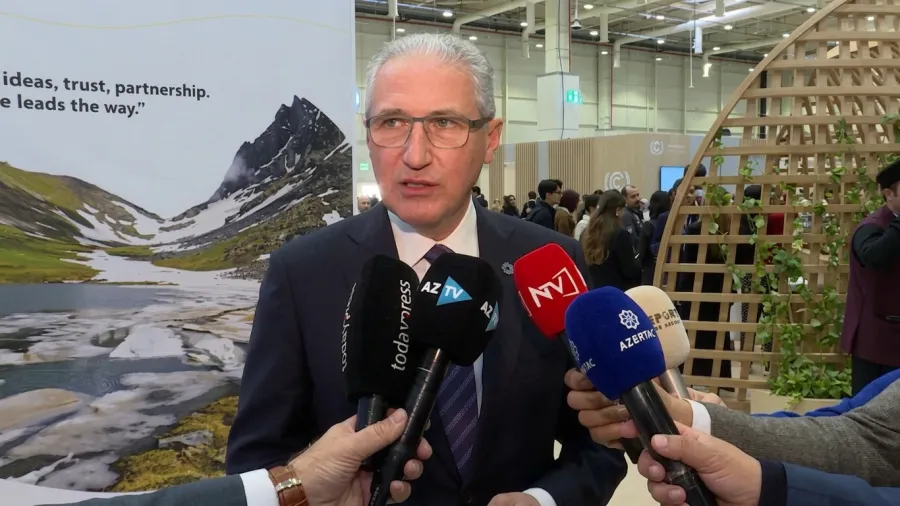
The 31st session of the Conference of the Parties to the United Nations Framework Convention on Climate Change (COP31) began its work today in Antalya, Türkiye.
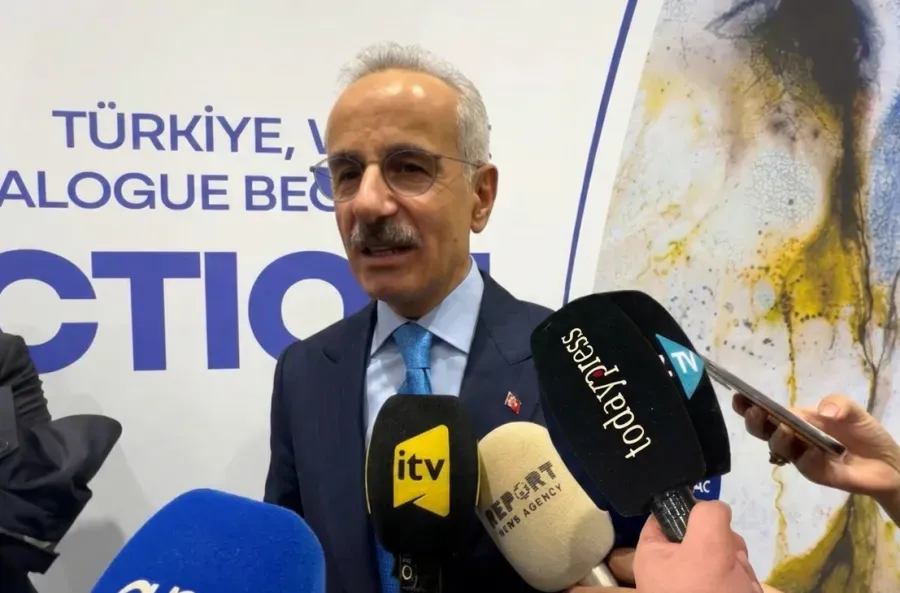
TodayPress TV reports that, on the opening day of COP31, COP29 President Mukhtar Babayev gave an interview to Azerbaijani media.
In the interview, he discussed the importance of initiatives put forward by Azerbaijan during COP29, climate finance, the environmental challenges facing the Caspian Sea, the threat posed by landmines, and opportunities to draw on Azerbaijan’s experience at COP31.
– COP29 was held in Azerbaijan, COP30 in Brazil, and COP31 is taking place in Türkiye. How do you assess the overall process?
– Activities have already begun in earnest. Today is the opening day. During the opening ceremony, both the COP30 and COP31 presidents made remarks addressed to COP29 and Azerbaijan and expressed their gratitude to our country. This is because numerous decisions were adopted and important initiatives put forward in Azerbaijan. Today, the vast majority of countries have joined these initiatives.
We are also here today to ensure the implementation of the decisions adopted in Azerbaijan. Many decisions are made, but when it comes to implementing them, either a lack of funding or other problems arise, or different priorities come to the fore.
We are trying to encourage countries, financial institutions and, in particular, developed nations to approach this demanding process with greater ambition and contribute more financial resources, expertise and human resources.
– You mentioned financial issues. This is a very serious matter. Azerbaijan placed particular emphasis on this area at COP29 and achieved tangible results. Do you think COP30 and COP31 will be able to achieve their stated objectives?
– As you know, every climate conference has its own agenda and key focus. In Azerbaijan, finance was one of the most important issues. A unique outcome was also achieved: the previous $100 billion financial commitment was tripled.
Azerbaijan demonstrated its leadership and strength in this area very effectively. In particular, from the very beginning, our head of state, respected President Ilham Aliyev, emphasised the importance of providing unwavering support to small island states, developing countries and nations facing more difficult economic circumstances.
Allocating financial resources to these countries and mobilising other parties to help address their problems were among Azerbaijan’s key priorities.
Today, the initiative put forward by Azerbaijan continues to receive high praise from countries around the world, particularly island nations and African states. They say that Azerbaijan and its president raised this issue on the international stage, calling on all countries to assume their responsibilities. Developed nations were urged to recognise their responsibility for the current situation, avoid shying away from leadership, allocate financial resources and play a leading role in the process.
– Will issues concerning the Caspian Sea also be raised at COP31?
– Absolutely. This is also one of the main focuses of our pavilion. If you visit it, you will find a wealth of materials dedicated to the Caspian Sea.
This is one of the most complex environmental challenges facing our region. Of course, the state of the Caspian Sea will be discussed both at the Azerbaijani pavilion and during other events. We will seek to increase the interest of the international community, international financial institutions and organisations in this issue.
– Another sensitive issue for Azerbaijan is its mine-contaminated territories. Is this problem being kept in the spotlight at international events, including COP31?
– Let me tell you something: the Karabakh Revival Fund, together with ANAMA, will screen a film here. We will invite the audience to attend the screening and try to demonstrate the scale of this problem.
Numerous programmes have been adopted in Azerbaijan to address mine clearance, substantial funds have been allocated, and considerable attention and resources have been devoted to the issue. However, this is not a problem exclusive to Azerbaijan. There are countries around the world that have been struggling to resolve issues related to mine-contaminated territories for 30–40 years.
That is why this issue will certainly be discussed not only at the Azerbaijani pavilion but also at other pavilions and events. The problem of landmines is environmental, social and humanitarian in nature. It directly affects people's lives.
This is precisely why the issue is so important, and we will work to bring it back to the forefront of international discussions.
– In your remarks about the conference, you said that Azerbaijan’s experience would be used. What kind of experience are you referring to?
– You know, we began working with the Turkish team from the very first day. Our climate negotiators are also playing a major role in this process. Their experience is being used both in preparing the topics and in conducting negotiations.
The most important challenge is ultimately to secure the agreement of nearly 200 countries and reach a common position and compromise. No matter how hard we work, we must always consider whether we will be able to secure the agreement of all countries on the final decisions. This is a very important issue.
Therefore, efforts in Türkiye will focus on adopting pragmatic decisions and programmes that take development and the subsequent implementation of those decisions into account.
One of the key issues, in particular, is electrification. The Turkish team has identified this as one of the most important areas of negotiation. Another significant issue is the zero-waste approach and waste reduction.
Of course, financing remains on the agenda as well. All these processes need to be translated into concrete programmes, and funding is required to implement them.
These funds should primarily be provided by developed countries, international financial institutions and the private sector. The private sector's involvement also depends, to a certain extent, on major countries and banks allocating funding in this direction. Once they see that substantial financial support is being provided to this area, they too will join the process.
That is why financing remains at the centre of the agenda here. Naturally, the success of the Turkish team will also depend greatly on close and active cooperation with our negotiating groups.
Giymat Mahir